Last updated: August 20, 2026
China is no longer simply the world’s largest automotive market by volume. Its automotive industry is simultaneously scaling new energy vehicles, intelligent driving technologies, global exports and increasingly software-intensive vehicle architectures.
According to the China Association of Automobile Manufacturers, China produced 34.531 million vehicles in 2025, an increase of 10.4%, while sales reached 34.4 million, up 9.4%.
For Executive Search, the scale of the market is only part of the story. The more important leadership question is how quickly the capabilities required to compete inside that market are changing.
Executive Search in China’s Automotive Industry: Scale Meets Transformation
China remained the world’s largest automotive market for the 17th consecutive year in 2025.
However, the industry’s composition is changing as rapidly as its overall scale.
New energy vehicle production reached 16.626 million units in 2025, up 29%, while sales reached 16.49 million, up 28.2%.
CAAM also reported that NEVs represented more than half of domestic new-vehicle sales in 2025.
Key Figures at a Glance
| China Automotive Indicator | Latest Data | Source | Executive Search Implication |
|---|---|---|---|
| Vehicle production | 34.531m, +10.4% | CAAM | China’s industrial scale continues to require executives capable of managing highly complex manufacturing and supply-chain systems. |
| Vehicle sales | 34.4m, +9.4% | CAAM | Commercial leadership must operate in an enormous but increasingly competitive and technologically differentiated market. |
| New energy vehicle sales | 16.49m, +28.2% | CAAM | Electrification is reshaping product, engineering, manufacturing, supply-chain and commercial leadership requirements. |
| Vehicle exports | 7.098m, +21.1% | CAAM | Global expansion increasingly requires executives capable of transferring Chinese automotive capabilities into different regulatory and commercial markets. |
New Energy Vehicles Have Become a Core China Automotive Leadership Issue
Electrification is no longer a peripheral segment of China’s automotive industry.
With NEVs representing more than half of domestic new-vehicle sales in 2025, manufacturers and suppliers increasingly need to integrate electric powertrains into mainstream product and industrial strategies.
This changes senior leadership mandates across several functions.
Engineering leaders may need to manage battery, power electronics and software integration. Supply Chain executives may need to redesign supplier ecosystems. Commercial leaders may need to reposition portfolios as customer expectations and product economics change.
For CEOs and General Managers, electrification increasingly affects capital allocation, pricing, manufacturing strategy and competitive positioning rather than remaining a specialist technology discussion.
Intelligent Driving Is Creating New Automotive Executive Search Requirements
The next transformation is not limited to the powertrain.
China’s automotive industry is also moving rapidly towards intelligent and connected vehicles.
In 2026, passenger vehicles equipped with combined driver-assistance systems reached a new-vehicle penetration rate of 70%, while vehicles equipped with navigation-assisted driving functions exceeded 30%.
China also granted conditional market access to its first two L3 conditional automated-driving vehicle models in December 2025.
In July 2026, authorities published a mandatory national safety standard for L3 and L4 automated-driving systems that is scheduled to take effect on 1 July 2027.
For Executive Search, this expands the candidate profile beyond traditional mechanical and manufacturing expertise.
China’s Automotive Export Growth Is Changing the Leadership Mandate
China’s automotive industry is also becoming increasingly international.
Vehicle exports reached 7.098 million units in 2025, increasing 21.1%.
CAAM separately reported that new energy vehicle exports reached 2.615 million units in 2025.
For Chinese manufacturers, international growth can require executives who understand market entry, localisation, overseas dealer networks, international supply chains, regulatory certification and cross-cultural organisational management.
For multinational manufacturers operating in China, the opposite challenge can apply: leaders may need to connect China’s speed of product development, supplier ecosystem and technology adoption with global headquarters and international platforms.
International experience is therefore becoming useful in both directions.
Automotive Software Is Changing Traditional Leadership Boundaries
As vehicles become more connected and software-defined, responsibility increasingly crosses traditional organisational boundaries.
Engineering, product, technology, cybersecurity, data and customer-experience teams may all influence the same vehicle function.
China’s 2026 automotive standardisation programme includes work on automotive operating systems, data security, software quality, connected-vehicle communications and automated-driving standards.
This makes cross-functional leadership increasingly valuable.
An executive may be technically strong but still struggle if they cannot align engineering, software, regulatory and commercial teams around a common product architecture.
What Executive Search Should Assess in China’s Automotive Leaders
Electrification Experience
Candidates should demonstrate how they have personally managed changes in powertrain, manufacturing, suppliers, product portfolio or commercial strategy as electrification increased.
Software and Intelligent-Vehicle Leadership
Senior executives increasingly need enough understanding of software, data and driver-assistance technology to make informed strategic decisions and align technical teams.
Industrial Transformation
The search should establish whether a candidate has personally launched manufacturing capacity, redesigned production systems, improved productivity or integrated new vehicle technologies at scale.
Supply Chain Leadership
China’s automotive ecosystem involves deep supplier networks. Executives should understand localisation, supplier economics, technology sourcing and the trade-offs between efficiency and resilience.
Global Expansion
For manufacturers growing internationally, relevant experience may include market entry, overseas manufacturing, regulatory homologation, distribution and managing international teams.
Regulatory and Safety Judgement
Automated driving, data and connected technologies increasingly require executives to integrate regulatory and safety considerations into product decisions rather than address them only after development.
Chinese and Multinational Automotive Companies Face Different Leadership Challenges
The same automotive market can create very different Executive Search mandates.
A Chinese OEM expanding internationally may need executives with overseas market-entry experience, international governance exposure and the ability to build local teams outside China.
A multinational OEM operating in China may instead need executives capable of responding more quickly to local product cycles, integrating Chinese technology partners and influencing global headquarters.
Suppliers may face a third challenge as OEM requirements shift towards batteries, electronics, sensors, software and intelligent-driving systems.
The candidate specification should therefore follow the company’s position in the value chain and its next transformation rather than a generic description of automotive leadership.
Direct Competitors Are Not Always the Best Automotive Talent Pool
Some automotive roles require deep sector expertise, particularly where manufacturing, safety or product regulation is highly specific.
Other mandates can justify mapping adjacent industries.
Executives from semiconductors, industrial software, artificial intelligence, batteries, electronics or advanced manufacturing may have relevant experience when the transformation itself crosses industry boundaries.
The search should therefore establish which elements of automotive experience are indispensable and which capabilities can be transferred from another sector.
For related China market context, see our analysis of Executive Search trends in China’s automotive industry.
How Zavala Civitas Approaches Automotive Executive Search in China
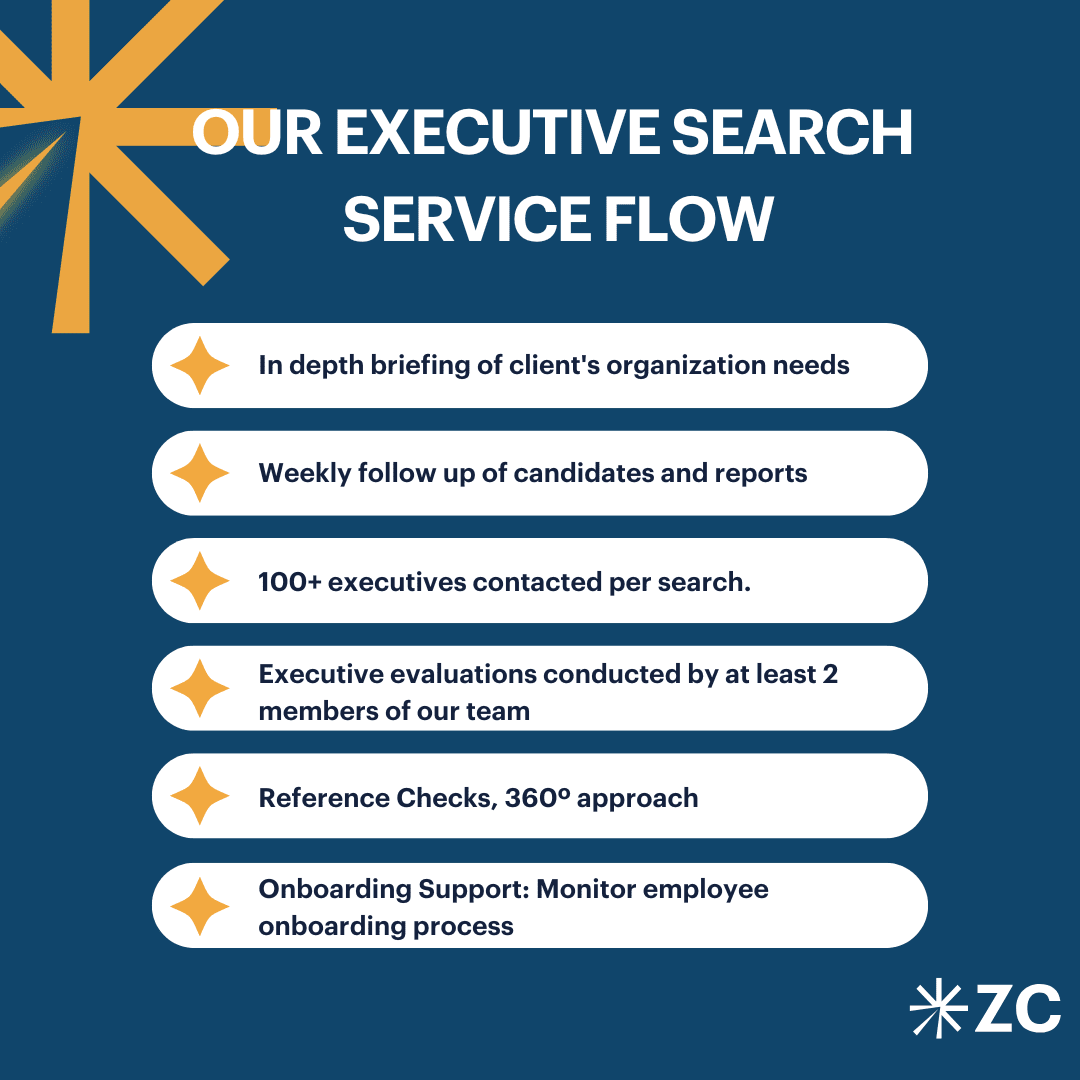
Zavala Civitas begins by defining the business and technology transformation the executive is expected to lead.
The relevant candidate market can then be mapped across OEMs, suppliers, mobility companies and adjacent technology or industrial sectors.
The Executive Search methodology combines market mapping, direct candidate identification, structured assessment and reference validation to identify what candidates have personally delivered rather than relying on title or employer reputation.
Our Industrial Executive Search practice supports senior appointments across automotive, manufacturing and related industrial businesses.
Frequently Asked Questions: Automotive Executive Search in China
Automotive experience matters. Leading the industry’s next transformation matters more.
Zavala Civitas supports automotive and industrial organisations in identifying executives capable of leading electrification, intelligent mobility and international growth in China.
Executive Search → Industrial Sector → Contact Us →