
Brazil closed 2025 with a GDP of R$12.7 trillion, growing 2.3% compared with the previous year. Services generated approximately R$7.6 trillion, reflecting the scale and diversity of an economy that includes financial services, retail, professional services, hospitality, technology and other major industries.
Source: IBGE, GDP grows 2.3% in 2025 and closes the year at R$12.7 trillion.
The size and complexity of the Brazilian economy create continuous demand for experienced leadership. However, the current talent challenge should not simply be described as a shortage of professionals or an exodus of Brazilian talent.
Brazil’s labour market entered 2026 from a historically strong position. The annual unemployment rate fell to 5.6% in 2025, the lowest level in the IBGE series that began in 2012, while the employed population reached a record 103 million people.
Source: IBGE, Continuous PNAD 2025.
| Brazil Market Indicator | Executive Search Context |
|---|---|
| R$12.7 trillion GDP | Brazil’s economy grew 2.3% in 2025, reinforcing the scale of leadership responsibilities in the market. |
| 103 million employed | Brazil recorded its highest employed population since the current IBGE series began. |
| 5.6% annual unemployment | The lowest annual unemployment rate in the series indicates a strong labour market and competition for specific profiles. |
| Tax reform transition began in 2026 | Finance, commercial and operational leaders increasingly need to understand the transition to the new CBS and IBS framework. |
Challenges of the Executive Search Market in Brazil
1. Intense Competition for Specific Executive Profiles
Brazil has a large professional workforce, but this does not mean every executive profile is readily available. International companies frequently require a combination of sector knowledge, management experience, international reporting exposure, language capabilities and familiarity with Brazil’s regulatory and commercial environment.
With unemployment at historically low levels, experienced executives with these combinations of capabilities may have several alternatives and little reason to participate in traditional recruitment processes.
2. Cross-Border Competition for Brazilian Leadership Talent
Competition for senior Brazilian talent is not restricted to local companies. Executives with experience operating in a large and complex market can also be relevant to regional and global organizations.
This creates a broader candidate market in which companies recruiting in Brazil may compete with employers offering regional or international responsibilities. An Executive Search strategy should therefore evaluate both executives currently operating locally and Brazilian leaders working internationally when the assignment justifies it.
3. Brazil’s Tax Reform Is Changing Leadership Requirements
Brazil’s complex tax environment has long influenced how companies structure and operate their businesses. However, the environment itself is now changing.
The country’s consumption tax reform entered its testing phase in 2026, introducing the new federal CBS and state and municipal IBS. The transition continues through 2032, with the new model expected to be fully effective in 2033.
Source: Receita Federal, Reforma Tributária do Consumo.
For Executive Search, this can affect the profile required for CFOs, finance directors, commercial executives, supply-chain leaders and general managers. Relevant candidates may need not only historical knowledge of the Brazilian system, but evidence that they can manage the transition itself and explain its implications to international headquarters.
4. Compensation and Candidate Expectations
A strong labour market can increase competition for executives with specialised backgrounds. However, Executive Search should not assume that compensation alone determines whether a candidate will move.
Senior candidates may also evaluate decision-making authority, regional responsibilities, reporting lines, long-term incentives, organizational stability and the strategic importance of the Brazilian operation within the wider company.
These expectations should be understood early in the search so that the company can distinguish between a compensation gap and a broader mismatch in the attractiveness or scope of the role.
5. Local Knowledge and International Communication
International companies often require leaders who can operate effectively inside Brazil while communicating with regional or global headquarters.
This means assessing more than language proficiency. Executives may need to translate local regulatory, commercial and organizational realities into decisions that international stakeholders can understand while also adapting global strategy to the Brazilian environment.
6. Brazil Should Not Be Treated as a Generic Latin American Market
Brazil’s scale, language, regulatory environment, regional differences and business structures make it materially different from many other Latin American markets.
A leadership profile that has succeeded elsewhere in Latin America may therefore be relevant, but should not automatically be assumed to transfer successfully to Brazil. The search needs to identify which parts of the candidate’s experience are genuinely comparable with the mandate.
Executive Search Services in Brazil
Zavala Civitas supports companies recruiting senior leaders in Brazil through its Executive Search methodology and its Latin America presence in São Paulo.
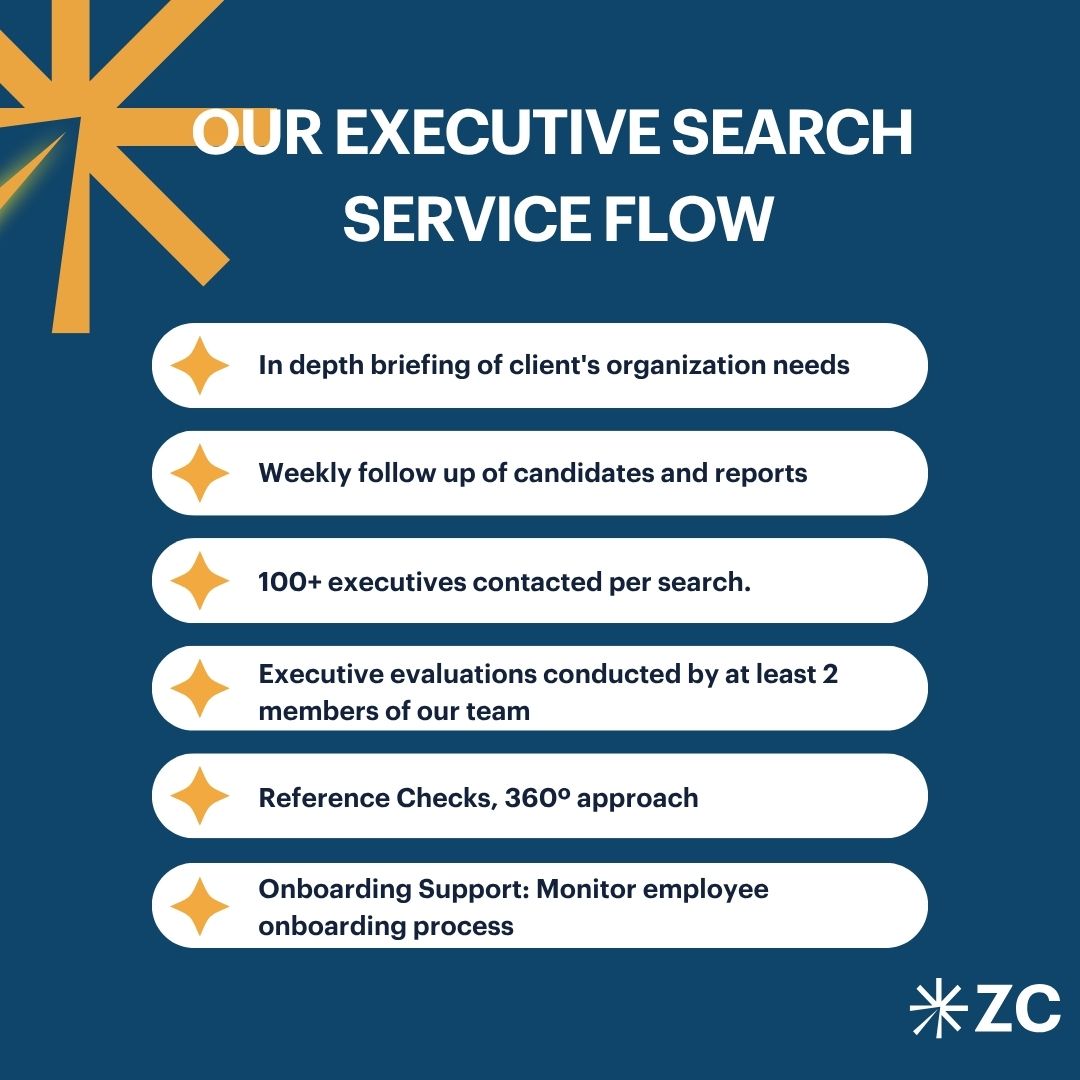
The firm’s process begins with a detailed understanding of the client’s organization, environment and critical success factors before the relevant market and candidate universe are defined.
Market research and direct candidate identification are particularly important in Brazil because the strongest executive for a role may not be actively considering a career move or may currently be operating outside the immediate industry or geography initially considered by the client.
Frequently Asked Questions About Executive Search in Brazil
Is there a shortage of executive talent in Brazil?
Brazil has a large workforce and recorded 103 million employed people in 2025. The Executive Search challenge is therefore not a universal shortage of professionals, but competition for senior candidates who combine the specific industry, leadership, regulatory and international experience required for a particular mandate.
Why is Brazil a complex market for Executive Search?
Brazil combines economic scale with regional diversity, a distinct Portuguese-speaking business environment and significant regulatory complexity. International companies may therefore need leaders who can operate effectively in the local market while remaining aligned with global headquarters.
How does Brazil’s tax reform affect executive hiring?
The transition to the new CBS and IBS framework began in 2026 and will continue over several years. For relevant finance, commercial and operational roles, companies may increasingly need leaders who understand both the existing system and the implications of the transition for pricing, reporting, systems and business decisions.
Should companies consider Brazilian executives working internationally?
Yes, when the role justifies a wider candidate map. Brazilian executives working in regional or global positions may combine local-market knowledge with international experience, while executives from other markets may also be relevant when they have managed comparable complexity at scale.
How does Zavala Civitas conduct Executive Search in Brazil?
Zavala Civitas begins by defining the business context, responsibilities and critical success factors of the role. The process then combines market mapping, direct candidate identification, interviews, quantitative and qualitative evaluation and reference validation to assess candidates against the specific mandate.
Learn more about our Executive Search methodology or contact us to discuss an executive requirement in Brazil.