
Last updated: August 20, 2026
Alibaba, Huawei and Tencent are three Chinese companies with a strong presence in global markets. Their growth illustrates a broader transformation in China’s economy: manufacturing capability remains important, but competitive advantage increasingly depends on technology, intellectual property, product development and innovation. Executives therefore need to lead companies through a different type of growth, and executive search firms must adapt the leadership profiles they assess.
From the early stages of China’s industrial expansion through the first decades of the twenty-first century, economic growth benefited from manufacturing scale, labour availability, investment and technology transfer. The expression “Made in China” became closely associated with the country’s role in global manufacturing and supply chains.
That manufacturing strength remains important, but China’s economic model now places substantially greater emphasis on domestic innovation, advanced technology and research. In 2025, China invested more than RMB 3.92 trillion in research and development, equivalent to 2.8% of GDP.
Key Figures at a Glance
| Data point | Finding | Source |
|---|---|---|
| China R&D investment, 2025 | More than RMB 3.92 trillion, 2.8% of GDP | Ministry of Science and Technology / State Council |
| Valid domestic invention patents, end 2025 | 5.32 million | China National Intellectual Property Administration |
| Domestic invention patents held by enterprises, end 2025 | 4.02 million, 74.5% | China National Intellectual Property Administration |
| China Global Innovation Index ranking, 2025 | 10th globally, 5th in innovation outputs | World Intellectual Property Organization |
Executive Search in China: Leadership for an Innovation-Led Economy
Leadership requirements have evolved alongside China’s economy. In manufacturing-led environments, senior executives may have been evaluated primarily on operational efficiency, production scale, cost management and the ability to organise large workforces.
Those capabilities remain important in many sectors, but innovation-led businesses require additional leadership strengths. CEOs and functional executives increasingly need to understand how research, intellectual property, technology and product development connect with commercial strategy and long-term value creation.
Capabilities increasingly relevant to executive search in China
- Commercialisation of R&D and new technologies.
- Product and innovation strategy.
- Intellectual property awareness.
- Capital allocation between current operations and future growth.
- Artificial intelligence and digital transformation judgement.
- Ability to build specialised technical and commercial teams.
- International expansion and cross-border stakeholder management.
- Organisational transformation and change leadership.
China’s Innovation Landscape in 2026
The scale of China’s innovation ecosystem is now substantially different from the historical figures referenced when this article was originally written. By the end of 2025, China held 5.32 million valid domestic invention patents, including 2.29 million classified as high-value invention patents.
Companies are central to this innovation activity. Enterprises held approximately 4.02 million domestic invention patents in force at the end of 2025, representing 74.5% of the total. This is particularly relevant for executive search because innovation is increasingly an operating and commercial responsibility inside companies rather than an activity isolated within universities or research institutions.
From Manufacturing Excellence to Commercialising Innovation
The shift from “Made in China” towards a more innovation-led model does not mean manufacturing has become less important. Advanced manufacturing itself increasingly depends on software, automation, robotics, artificial intelligence, new materials and proprietary technology.
The leadership challenge is therefore not to replace operational capability with creativity. It is to combine both. Executives need to preserve execution discipline while creating environments where technical teams can experiment, develop intellectual property and turn successful ideas into commercially viable products.
What Executive Search Should Assess in Innovation Leaders
Executive search is not only about identifying a candidate who fits an existing job description. When a company’s business model is changing, the role itself may need to be reconsidered before the candidate market is mapped.
Innovation experience
Companies should examine what type of innovation an executive has actually led. Launching a new product, building a technology platform, transforming manufacturing through automation and commercialising scientific research require different leadership capabilities.
Commercial judgement
Innovation leadership requires an ability to distinguish technically interesting projects from those capable of producing strategic or economic value. Executives need to understand customers, business models, investment requirements and the path from research to commercial scale.
Organisational leadership
Innovation often requires collaboration between technical, commercial, operational and financial teams. Senior leaders therefore need to build organisational structures that allow experimentation without losing accountability, execution discipline or strategic focus.
Zavala Civitas Executive Search Methodology for Innovation Leadership in China
Executive search is not only about finding a candidate who fits the job description. Headhunters need to deeply analyse executives’ profiles, career development, organisational alignment and readiness to lead the company’s future strategy as China continues its shift from manufacturing scale towards innovation-led value creation.
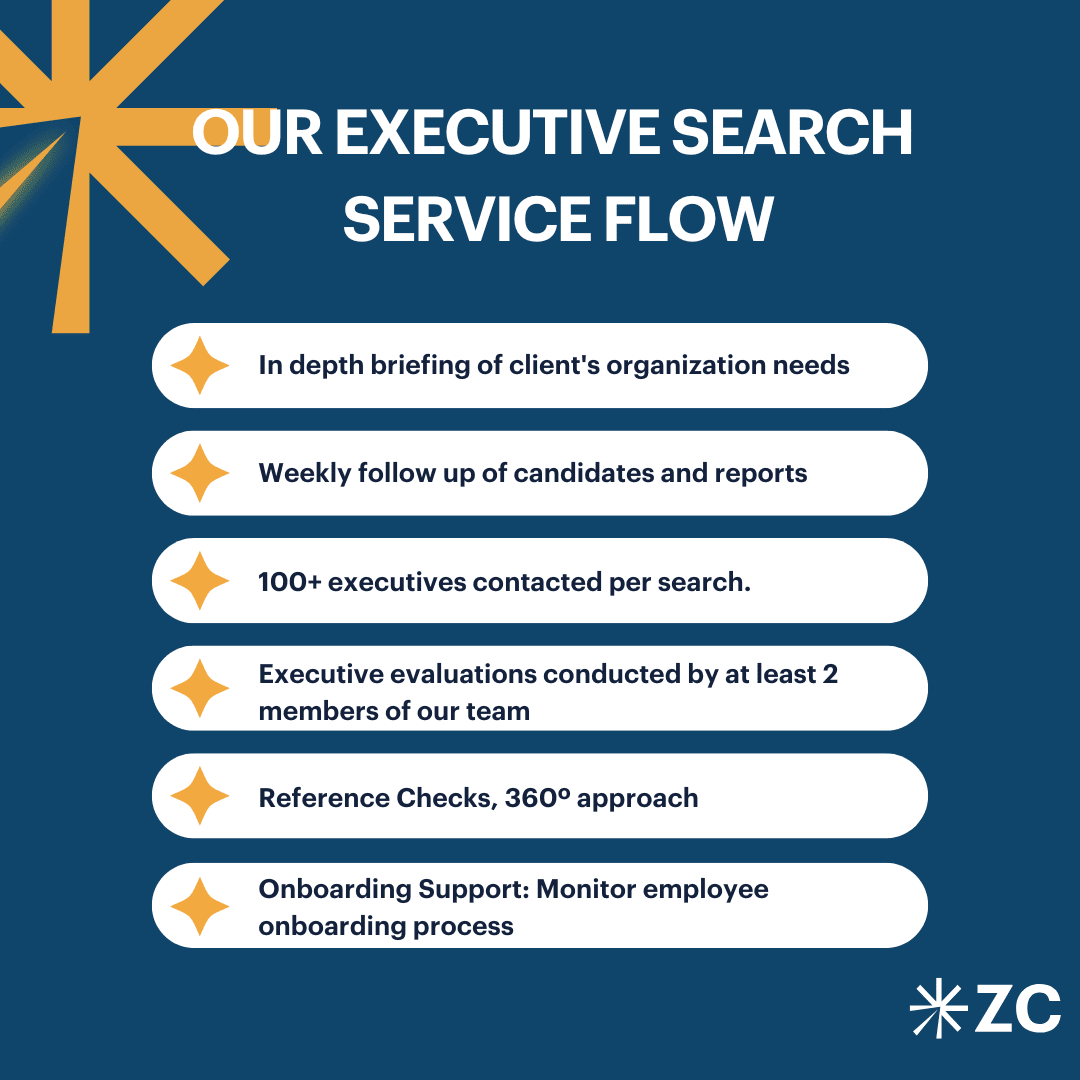
Zavala Civitas begins with an in-depth briefing to understand the organisation, its environment and the critical success factors of the position. The process then includes detailed market mapping, direct executive outreach and structured evaluation. Our Executive Search methodology directly contacts more than 100 executives per search, evaluates candidates through at least two consultants, performs 360-degree reference checks and follows the executive’s onboarding after appointment.
Frequently Asked Questions: Innovation and Executive Search in China
Building innovation leadership in China?
Zavala Civitas helps organisations identify executives capable of translating technology, innovation and R&D investment into scalable commercial results. 92% executive search closing rate.
Executive Search → Technology, Media & Telecom → Contact Us →