Last updated: August 20, 2026
China continues to change quickly, but the leadership challenge is no longer simply how to manage rapid growth. In the first half of 2026, China’s GDP grew by 4.7% year-on-year, while individual sectors moved at very different speeds.
Information transmission, software and information technology services grew by 10.7% in the same period, while total retail sales of consumer goods increased by only 1.3%.
For CEOs, this means managing an economy in which technology, consumer behaviour, employment models and sustainability requirements are evolving at different speeds. For Executive Search, the question is therefore not simply whether a candidate understands China, but whether that executive can interpret these changes and translate them into decisions about strategy, people, investment and organisation.
China’s Main Business Trends in 2026
Key Figures at a Glance
| Business Trend | Latest Data | Source | Leadership Implication |
|---|---|---|---|
| Artificial intelligence | RMB 1.2tn+ core industry; 6,200+ companies | Chinese Government / MIIT, 2025 | CEOs increasingly need to connect AI investment with operating models, productivity and commercial results. |
| Flexible employment | More than 200 million people | State Council report to NPC, 2025 | Workforce strategy increasingly needs to accommodate multiple employment models while maintaining accountability and capability. |
| Online retail in H1 2026 | RMB 10.0715tn, +5.2% | National Bureau of Statistics | Digital channels continue to expand faster than overall consumer retail, increasing the value of executives who understand digital demand and customer behaviour. |
| Green transition | CO2 intensity -5%; clean power +14.4% | National Bureau of Statistics, 2025 | Sustainability increasingly affects operating models, investment decisions, supply chains and leadership accountability. |
How Artificial Intelligence Is Changing the CEO Role in China
Artificial intelligence has moved from a future scenario to an operating issue for Chinese businesses. China’s core AI industry exceeded RMB 1.2 trillion in 2025, with more than 6,200 AI companies.
AI adoption is also moving beyond technology companies. By the end of 2025, more than 30% of major manufacturing enterprises had adopted AI technologies.
This does not mean that every business function will simply be automated. The more immediate CEO challenge is deciding where AI genuinely creates economic value.
Leadership teams need to determine which workflows should be redesigned, where human judgement remains essential, which capabilities need to be recruited or developed and how accountability changes when decisions become more data- and algorithm-assisted.
This is also changing the profile of technology leadership. Our analysis of AI and Deep Tech Executive Search in China examines why technical expertise increasingly needs to be combined with commercial and organisational leadership.
China’s Workforce Is Becoming More Flexible and More Complex
The traditional distinction between permanent employees and external suppliers is becoming less useful as organisations work with a wider range of employment models.
A State Council report presented to the National People’s Congress in December 2025 estimated that China now has more than 200 million people engaged in flexible employment.
This includes a very broad range of employment situations, so it should not be interpreted as 200 million corporate freelancers. The figure does, however, illustrate how significant non-traditional employment has become within China’s labour market.
For CEOs, the strategic issue is therefore not simply whether to employ more freelancers or reduce permanent headcount. It is how to determine which capabilities belong inside the organisation, which can be accessed externally, and how knowledge, culture and accountability are maintained across different forms of work.
Consumer Behaviour in China Is Becoming More Digital and Selective
China’s consumer market should also be understood with more nuance than a simple shift from mass consumption to conscious consumption.
In the first half of 2026, total retail sales of consumer goods reached RMB 24.8722 trillion, increasing 1.3% year-on-year. Online retail sales of goods and services reached RMB 10.0715 trillion, up 5.2%.
Services consumption was also comparatively stronger: retail sales of services increased by 5.3% in H1 2026, compared with 1.1% growth in goods.
For consumer-facing CEOs, this means that understanding China’s market increasingly requires segmentation rather than broad assumptions about “the Chinese consumer”. Channel, category, region, price sensitivity, digital behaviour and customer experience can produce very different growth patterns.
Sustainability Is Becoming an Operating Issue for CEOs in China
Sustainability has also moved beyond a reputational or communications question.
China’s 2025 national economic and social development data reported that carbon dioxide emissions per RMB 10,000 of GDP fell by 5.0% year-on-year.
Clean electricity generation from hydro, nuclear, wind and solar reached 4,248.1 billion kWh, an increase of 14.4%.
These figures do not by themselves demonstrate changing consumer preferences, but they do show the scale of the structural green transition surrounding Chinese companies.
For CEOs, sustainability can therefore influence energy strategy, capital expenditure, product design, supply chain decisions, regulatory exposure and relationships with international customers and investors.
What CEOs in China Need to Manage Differently
1. Technology Without Losing Strategic Accountability
A CEO does not need to become an AI engineer, but senior leadership needs enough understanding of technology to challenge investments, understand risk and determine whether adoption is creating measurable business value.
2. Workforce Flexibility Without Organisational Fragmentation
Flexible talent models can give companies access to skills and capacity, but they also create questions around accountability, knowledge retention and culture. CEOs need clarity about which capabilities are strategically critical and should remain embedded within the organisation.
3. Consumer Segmentation Instead of Generic Market Assumptions
Slower headline retail growth alongside stronger online and services growth means that leadership teams need to understand precisely where demand is moving rather than treating China as one homogeneous consumer market.
4. Sustainability as Part of Business Strategy
Sustainability increasingly intersects with operations, energy, supply chains and investment. The relevant leadership capability is therefore not simply familiarity with ESG language, but experience incorporating environmental constraints and opportunities into commercial and operational decisions.
Executive Search for CEOs in China’s Changing Business Environment
These trends make the CEO search brief more complex.
A candidate may have strong China experience but limited evidence of digital transformation. Another may understand AI but have never managed a large workforce or complex stakeholder environment. A third may have led sustainability initiatives but not carried commercial responsibility.
This is why Executive Search should begin by defining the transformation the incoming CEO is expected to lead.
For multinational organisations, that can also require balancing local execution with global governance. Our analysis of Executive Search in China: Global Leadership, Local Focus examines that challenge in greater detail.
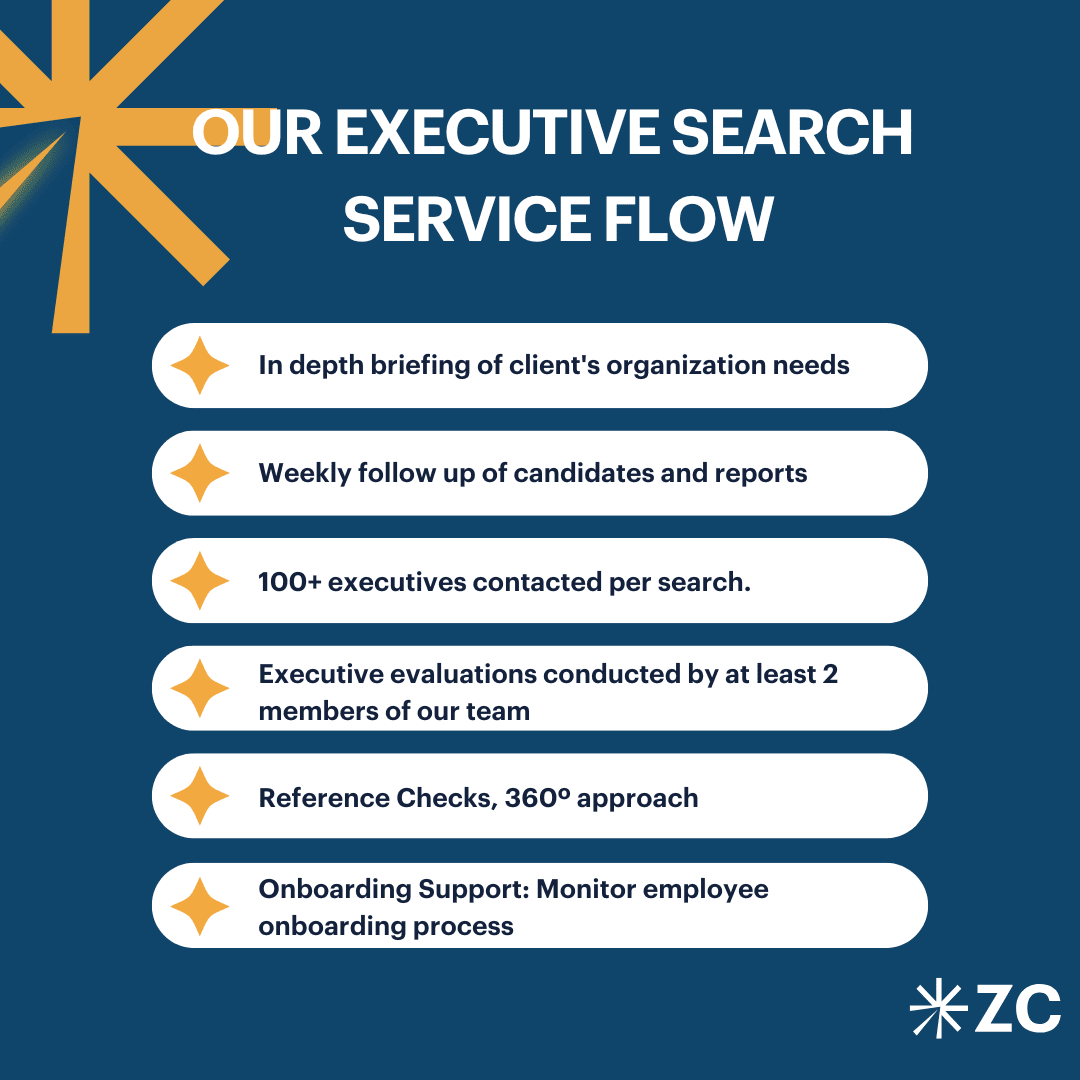
At Zavala Civitas, our Executive Search methodology combines definition of the leadership mandate, market mapping, direct candidate identification, structured assessment, reference validation and support throughout the appointment process.
Frequently Asked Questions: Business Trends and CEO Executive Search in China
China’s business environment is changing. The CEO mandate needs to change with it.
Zavala Civitas supports organisations in identifying and assessing leaders capable of managing technological, organisational and market transformation in China.
Executive Search → Executive Search in China → Contact Us →