
Last updated: August 20, 2026
Private equity (PE) and venture capital remain important components of China’s investment ecosystem. However, the market has changed significantly since the original publication of this article. Investment activity is more selective, fundraising conditions differ substantially between RMB and USD-denominated funds, and private equity firms are placing greater emphasis on sector expertise, control investments and active value creation.
China also has a substantial domestic private capital ecosystem. According to the Asset Management Association of China, there were 29,818 private equity investment funds managing approximately RMB 11.18 trillion and 27,342 venture capital funds managing approximately RMB 3.72 trillion at the end of 2025.
Key Figures at a Glance
| Data point | Finding | Source |
|---|---|---|
| Private equity investment funds in China, end 2025 | 29,818 funds, RMB 11.18 trillion AUM | Asset Management Association of China |
| Venture capital funds in China, end 2025 | 27,342 funds, RMB 3.72 trillion AUM | Asset Management Association of China |
| Greater China PE exit value, 2025 | Approximately US$53 billion | Bain & Company 2026 Greater China Private Equity Report |
| Growth investments as share of Greater China PE deal value, 2025 | Approximately 55% | Bain & Company 2026 Greater China Private Equity Report |
The Private Equity Market in China in 2026
The Greater China private equity market continued its recovery during 2025. According to Bain & Company’s 2026 Greater China Private Equity Report, both deal volume and deal value increased for a second consecutive year. Growth investments represented around 55% of total deal value, while buyout activity continued to increase as investors sought greater control over portfolio performance.
The fundraising environment remains more difficult. Greater China-focused USD fundraising stayed at relatively low levels, while RMB-denominated funds became an increasingly important source of new capital. Bain also identifies greater concentration of investment in sectors including semiconductors, advanced technologies and healthcare.
What Current Private Equity Data Means for Executive Search in China
How Private Equity Opportunities in China Are Changing
Greater emphasis on active value creation
Private equity returns cannot be generalised as automatically higher than those available in other markets. Investors increasingly need to create value through operational improvement, strategic repositioning, growth initiatives and disciplined execution rather than assuming that market expansion or multiple appreciation alone will generate the required return.
Increasing interest in control investments
Bain reports that buyout investment continued to rise in both value and volume during 2025. Greater control allows investors to influence management and strategic execution more directly, but it also raises the importance of identifying executives capable of operating within performance-driven ownership structures.
Sector specialisation
Capital is becoming more concentrated in selected industries, including advanced technology, semiconductors and healthcare. This increases the importance of sector knowledge because firms need investment professionals and portfolio executives who combine financial sophistication with a deep understanding of the businesses in which value must actually be created.
Improving exit conditions
Exit activity also improved during 2025. Greater China PE exit value reached approximately US$53 billion, compared with US$46 billion in 2024 and around US$17 billion in 2023. Secondary transactions drove activity early in the year, while IPO exits strengthened from the second quarter.
Private Equity Executive Search in China
There are two distinct dimensions to private equity executive search: leadership within the fund itself and leadership within portfolio companies. The required backgrounds, incentives and measures of success can be very different.
Fund-level executive search
At fund level, private equity and venture capital firms may require investment professionals, operating partners, senior advisers and functional leaders in investor relations, capital markets, finance, human resources and operations.
- Investment Partners and Managing Directors
- Operating Partners
- Investor Relations leaders
- Capital Markets executives
- CFOs and COOs
- Human Resources and Talent leaders
- Sector specialists and senior advisers
Portfolio-company executive search
At portfolio level, executive search is closely connected to the investment thesis. The C-suite is highly competitive because PE-backed companies often need executives who can deliver measurable transformation within a defined ownership horizon.
- CEOs capable of executing the sponsor’s value-creation plan.
- CFOs with strong reporting, cash-flow and transaction experience.
- COOs focused on operational improvement and scalability.
- Commercial executives capable of accelerating revenue growth.
- Board members with sector and governance experience.
- Technology and transformation leaders when digitalisation forms part of the investment thesis.
Talent Management as a Private Equity Value-Creation Lever
A trend we have seen as an executive search firm is the growing responsibility of private equity teams for proactive talent management and succession planning. As portfolios expand and performance expectations increase, sponsors cannot wait until a leadership problem becomes critical before mapping alternatives.
This can include assessing current management teams, identifying succession risks, benchmarking executives against the external market and determining whether leadership gaps should be addressed through development or external executive search.
One Zavala Civitas private equity case study involved a PE-backed business whose APAC region had generated negative EBITDA for two consecutive years. Following confidential talent mapping and a CEO search, the selected leadership change was followed six months later by the region returning from negative EBITDA and sales increasing 20% year on year. The case illustrates why leadership selection in PE-backed companies can be directly connected to the value-creation agenda.
Zavala Civitas Private Equity Executive Search Methodology in China
For private equity mandates, Zavala Civitas combines sector knowledge with an understanding of the sponsor’s investment thesis, portfolio situation and expected value-creation plan. The search then moves from role definition into structured market mapping, direct executive outreach and rigorous candidate assessment.
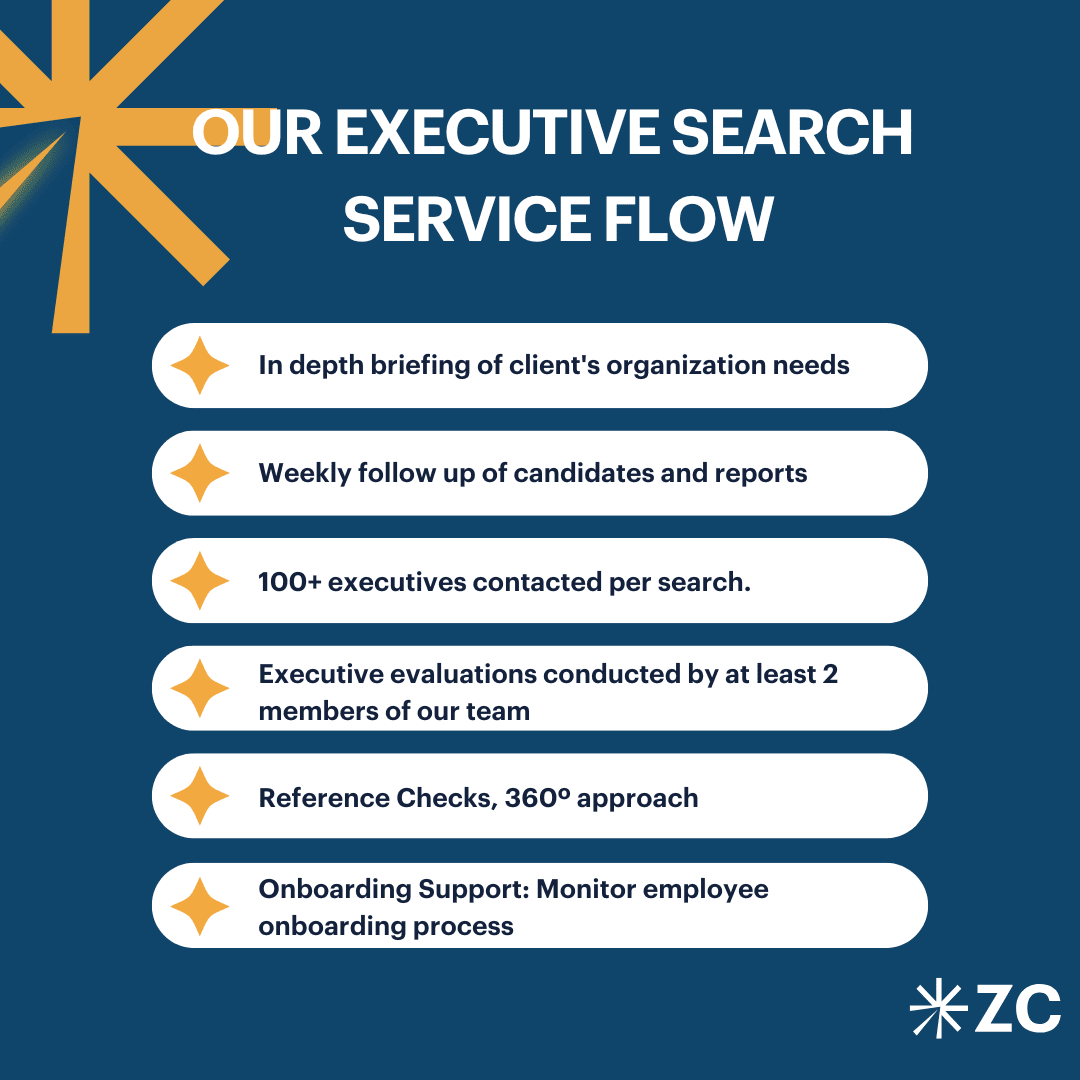
Our Executive Search methodology includes direct contact with more than 100 executives per search, assessment by at least two consultants, 360-degree reference checks and structured onboarding follow-up after appointment.
In Zavala Civitas we are specialized in the Chinese market and support private equity firms and portfolio companies across executive search and organizational consulting mandates.
Frequently Asked Questions: Private Equity Executive Search in China
Building leadership for a private equity investment in China?
Zavala Civitas supports private equity firms and portfolio companies in identifying leaders capable of executing investment theses, accelerating performance and building value across the ownership cycle. 92% closing rate.
Executive Search → Private Equity → Contact Us →