
The importance of Executive Assessment services for companies in China

Executive assessment services are becoming increasingly important for firms in China as they look to identify and groom top leadership talent. According to a recent survey, the market for executive assessment services in China is expected to reach $6.5 billion by 2025, with a compound annual growth rate of 9.2% from 2020 to 2025. These services provide a range of tools and techniques for evaluating the skills and capabilities of executives, including aptitude tests, personality assessments, and in-depth interviews. 

Why are executive assessments important for China Businesses?

One of the key benefits of executive assessments is that they can help companies identify the strengths and weaknesses of their executives. This can be particularly useful for companies in China, where the business environment is constantly evolving and there is a need for leaders who can adapt and thrive in a variety of situations. By identifying the skills and capabilities of their executives, firms can better position them for success and help them achieve their goals. 

This growth is being driven in part by the increasing importance of leadership development in China’s business environment. A study conducted by the China International Personnel Training Center found that 89% of Chinese businesses believe that leadership development is crucial to the success of their business, with 65% reporting that they have implemented leadership development programs. 

Another benefit of executive assessment is that they can help firms improve their succession planning. Succession planning is the process of identifying and developing the next generation of leaders within an organization. This is especially important in China, where many businesses are facing a leadership gap as a result of the country’s aging population. By using executive assessment services, companies can identify potential successors and develop them through targeted training and development programs. 

In addition to helping companies identify and groom top talent, executive assessment can also provide valuable insights into an organization’s overall leadership culture. By evaluating the skills and capabilities of their executives, companies can better understand the leadership behaviours that are most effective in driving success. This can help businesses create a more positive and productive work environment, which can in turn lead to better business performance. 

Overall, executive assessment services are an important tool for companies in China looking to identify and develop top leadership talent. By providing a range of tools and techniques for evaluating the skills and capabilities of their executives, this can help companies identify strengths and weaknesses, improve succession planning, and create a more positive and productive work environment.  

Executive Assessments in China

In conclusion, the market for executive assessment services in China is expected to continue growing at a rapid pace, with demand driven by the increasing importance of leadership development and the need to address the leadership gap created by the country’s aging population. Firms in China are increasingly recognizing the value of these services in helping to identify and develop top leadership talent, and this trend is likely to continue in the coming years.  Click here to get in contact with us.
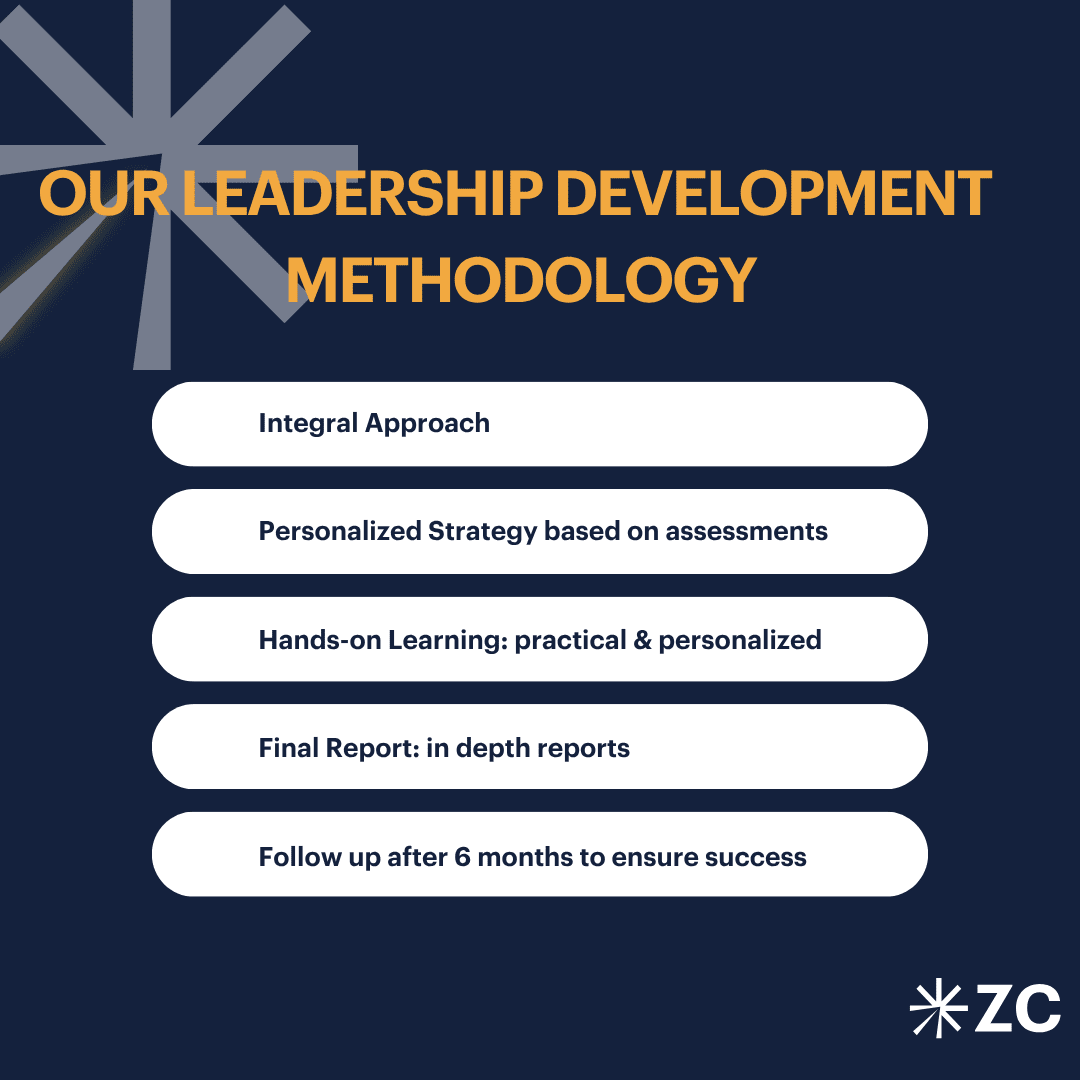
methodology for leadership development

executive team working on a business case

Executive Development and Assessment in Portugal: How Companies Improve Leadership Quality 

Executive assessment and leadership development are rapidly gaining relevance in Portugal as organizations face digital transformation, talent shortages, and increasing competitive pressure. Portuguese companies are recognizing that strong leadership is not a by-product of experience alone—it requires structured evaluation, targeted development, and continuous support.  According to Ken Research, Portugal’s corporate

Read More

Executive Development and Assessment in the U.S: From Evaluation to Strategic Growth

The new approach to executive growth in the U.S.  Across the U.S., organizations are moving away from traditional performance reviews and investing in data-driven development. Rather than evaluating results retrospectively, American companies now focus on predicting potential — using analytics and behavioral insights to identify executives capable of steering transformation. 

Read More

Related posts

Leadership and Decision-Making in Asia-Pacific’s Age of AI 

From Technology Adoption to Strategic Accountability  Across the Asia-Pacific (APAC) region, artificial intelligence has moved beyond experimentation. What only a few years ago sat within innovation labs or IT functions has now reached the center of executive and board-level decision-making.  This shift is already measurable. Nearly 48% of companies in Asia now

Read More

Tomás Grimaldi becomes Partner at Zavala Civitas Executive Search 

Madrid, Spain – January 2026  Zavala Civitas Executive Search announces the promotion of Tomás Grimaldi to Partner, reinforcing the firm’s long-term commitment to leadership, growth, and equity partnership continuity.  Tomás joined Zavala Civitas initially as Finance Manager and has progressively taken on broader responsibilities across business development, executive search, and

Read More

Executive Development and Assessment in Portugal for Senior talent

In Portugal, the market is relatively small, executive mobility is limited, and reputations travel quickly. Many companies already have solid senior leaders in place.It’s not about whether these leaders are competent. The question is how to assist them in improving performance as they take on greater roles.  Most people have an area that they can

Read More

The Insider Paradox: Why APAC Boards Are Choosing Continuity Over Disruption 

In H1 2025, 83% of all new CEOs in APAC were internal promotions the highest ratio ever recorded and dramatically higher than Western markets.  This surge is not accidental, nor is it a sign of risk-aversion. It reflects a deeper leadership strategy shaped by the geopolitical uncertainty of the region, operational complexity, and the rising value

Read More
china business landscape

Executive Search in China: Local Leadership vs Global Executives 

Over the past ten years, many multinational companies in China have quietly changed how they think about leadership. The model of relying primarily on expatriate executives is no longer taken for granted.   Boards and CEOs are increasingly weighing the trade-offs between local Chinese executives and global leaders sent from headquarters.

Read More

Executive Search in Mexico: Leadership Demand Shaped by Nearshoring 

Over the past few years, Mexico has moved to the center of many global expansion strategies. Nearshoring has accelerated investment decisions, operational scale, and organizational complexity across the country. As a result, leadership hiring has shifted from being opportunistic to becoming a critical risk factor.  In this environment, Executive Search in Mexico is

Read More