
Last updated: August 20, 2026
China has developed one of the world’s largest and most complex financial systems, spanning commercial banking, insurance, securities, asset management, fintech, wealth management and increasingly sophisticated capital markets.
The leadership challenge has consequently moved beyond simply understanding a fast-growing market.
Financial institutions now operate at enormous scale while responding to digital transformation, financial-market opening, regulatory change, data governance, risk management and increasingly international business models.
For Executive Search, this means regulated-sector experience alone is becoming a less precise predictor of leadership readiness. Organisations need evidence of what executives have personally changed, governed and delivered.
Executive Search in China’s Finance Sector: Scale Requires More Sophisticated Leadership
China’s financial system continued to expand in 2025.
The National Financial Regulatory Administration reported that banking institutions held RMB480 trillion in domestic and foreign-currency assets at the end of 2025, an increase of 8.0% year on year.
Large commercial banks alone held RMB210.8 trillion, representing 43.9% of banking-sector assets.
Insurance companies and insurance asset-management companies held a further RMB41.3 trillion in assets, 15.1% above the beginning of the year.
Key Figures at a Glance
| China Financial Sector Indicator | Latest Data | Source | Executive Search Implication |
|---|---|---|---|
| Banking-sector assets | RMB480tn, +8.0% | NFRA | Leadership decisions increasingly operate across institutions of exceptional financial and organisational scale. |
| Insurance and insurance asset-management assets | RMB41.3tn, +15.1% from start of year | NFRA | Banking and insurance should not be treated as one generic leadership market because their growth and operating models differ. |
| Commercial-bank non-performing loan ratio | 1.50% | NFRA | Growth must remain connected to credit judgement, portfolio monitoring and risk governance. |
| Shanghai A-share market | 2,315 companies; RMB67.77tn market cap | Shanghai Stock Exchange, May 2026 | Capital-markets leadership requires understanding a large and increasingly sophisticated listed-company ecosystem. |
Shanghai and Shenzhen Require Different Capital-Market Leadership Capabilities
China’s financial leadership market extends well beyond commercial banking.
Shanghai and Shenzhen remain major capital-market centres, while the Beijing Stock Exchange adds another venue focused particularly on innovative small and medium-sized enterprises.
As of May 2026, the Shanghai Stock Exchange A-share market included 2,315 listed companies with total market capitalisation of RMB67.77 trillion.
The STAR Market alone included 610 listed companies with RMB13.91 trillion of market capitalisation.
Shenzhen presented a similarly substantial but differently structured ecosystem. At the end of June 2026, it had 2,898 listed companies, including 1,399 on ChiNext, with total market capitalisation of approximately RMB49.53 trillion.
For Executive Search, this diversity matters.
A leader developed in a major commercial bank, an investment bank, an asset manager, a securities company or a technology-focused capital-markets business may have very different capabilities despite all being described as Financial Services executives.
Digital Finance Is Becoming an Organisational Transformation Mandate
Digital transformation is another major structural theme in China’s finance sector.
The People’s Bank of China and several other authorities issued an Action Plan for Promoting High-Quality Development of Digital Finance.
The plan aims for a financial system highly compatible with the digital economy to be essentially established by the end of 2027.
Importantly, the policy does not describe digital transformation simply as adopting more technology.
It addresses strategic planning, organisational management, data governance, digital operations, financial infrastructure, network security, risk prevention and consumer protection.
This broadens the leadership mandate considerably.
CEOs, COOs, CROs, CFOs and business leaders increasingly need enough technology and data understanding to govern transformation without delegating every decision to Technology.
China’s Finance Sector Is Still Opening to International Institutions
International leadership capability also remains relevant as China continues to open parts of its financial system.
In January 2025, Chinese authorities announced 20 measures designed to expand financial opening in pilot free trade zones and the Hainan Free Trade Port.
The measures include equal treatment for foreign financial institutions providing eligible new financial services, facilitation of cross-border fund flows and improvements to cross-border financial-data arrangements.
Shanghai continues to be a particularly important centre for this development.
By the end of 2024, Shanghai had 1,782 licensed financial institutions, approximately 30% of which were foreign-invested.
For multinational Financial Services organisations, senior appointments can therefore require an unusual combination of Chinese regulatory and market fluency with international governance and headquarters experience.
Banking, Insurance and Asset Management Require Different Executive Profiles
A common Executive Search mistake is treating Financial Services as a single candidate market.
The underlying economics can be substantially different.
China’s banking institutions reached RMB480 trillion of assets at the end of 2025, while insurance companies and insurance asset managers held RMB41.3 trillion.
Within banking, a retail institution, investment bank, wealth-management business and corporate bank also require different leadership capabilities.
Executive Search should therefore determine whether sector adjacency is useful or whether the mandate requires deep experience in the precise financial model.
A digital-transformation mandate may justify mapping banks, fintech companies and payment businesses together. A highly technical insurance or credit-risk mandate may require a narrower candidate universe.
Risk Leadership Remains Central Despite Stable Headline Banking Indicators
China’s commercial-bank credit indicators remained broadly stable at the end of 2025.
Commercial banks reported RMB3.5 trillion of non-performing loans and a non-performing loan ratio of 1.50%.
Their average capital adequacy ratio stood at 15.46%, while the provision coverage ratio was 205.21%.
Stable system-level metrics should not be used as a proxy for the complexity of individual institutions or portfolios.
Senior Risk, Credit and Finance executives should be assessed on how they identify vulnerabilities, challenge commercial assumptions, allocate capital and communicate risk to senior management and boards.
Financial Opening Creates Two-Way Leadership Requirements
China’s financial opening does not only create opportunities for international institutions entering China.
Chinese banks, insurers, asset managers and financial groups are also operating increasingly across borders.
For multinational organisations, the leadership requirement may involve translating global governance standards into Chinese operating reality.
For Chinese financial organisations expanding internationally, the challenge can be reversed: leaders need to understand foreign regulation, institutional investors, governance expectations and international talent markets.
This makes cross-border experience particularly valuable when it represents genuine responsibility rather than simply exposure to an international organisation.
What Executive Search Should Assess in China’s Finance Leaders
Regulatory Judgement
Executives should demonstrate how they have translated financial regulation into workable business, capital and governance decisions rather than treating compliance as a separate specialist function.
Risk and Capital Discipline
Relevant evidence can include credit decisions, balance-sheet management, capital allocation, liquidity, portfolio monitoring and the ability to challenge growth when risk-adjusted economics are weak.
Digital Transformation Ownership
Candidates should demonstrate what they personally changed in digital operations, data governance, customer experience, technology investment or organisational processes rather than simply citing digital transformation as part of their employer’s strategy.
Capital-Market Understanding
For securities, investment and asset-management roles, executives increasingly need to understand China’s multi-level capital markets, investor expectations and the distinct dynamics of Shanghai, Shenzhen and other trading venues.
International Stakeholder Management
Foreign institutions operating in China and Chinese institutions expanding internationally both require leaders capable of working across different regulatory, governance and organisational environments.
Board-Level Influence
Senior executives need to explain complex financial, technological and risk decisions to boards and other stakeholders and demonstrate where commercial objectives should be challenged.
Executive Search Should Follow the Financial Transformation, Not the Employer Label
China’s financial ecosystem contains large state-owned institutions, joint-stock banks, foreign financial institutions, insurers, securities companies, asset managers, wealth-management businesses and fintech companies.
Restricting a search to exact competitors can therefore exclude relevant executives.
A bank undergoing digital transformation may find relevant leadership within fintech or payments.
An asset manager expanding internationally may find stronger candidates inside another financial institution with comparable cross-border governance experience.
Conversely, highly specialised credit, insurance or regulatory roles may require deeper sector-specific expertise.
The candidate universe should therefore be defined by the business challenge first and the employer category second.
How Zavala Civitas Approaches Financial Services Executive Search in China
Zavala Civitas begins by defining the financial, regulatory and transformation mandate the executive is expected to deliver.
For a Financial Services search in China, this can include understanding:
- which financial business model the executive will lead;
- what regulatory and governance responsibilities sit within the mandate;
- whether the organisation needs growth, restructuring or digital transformation;
- how important capital, credit or liquidity decisions are to the role;
- whether relevant talent may sit across banking, insurance, asset management or fintech;
- which Chinese and international stakeholders the executive must influence;
- and what each candidate personally owned in previous transformations.
The candidate market can then be mapped across direct competitors and relevant adjacent financial institutions.
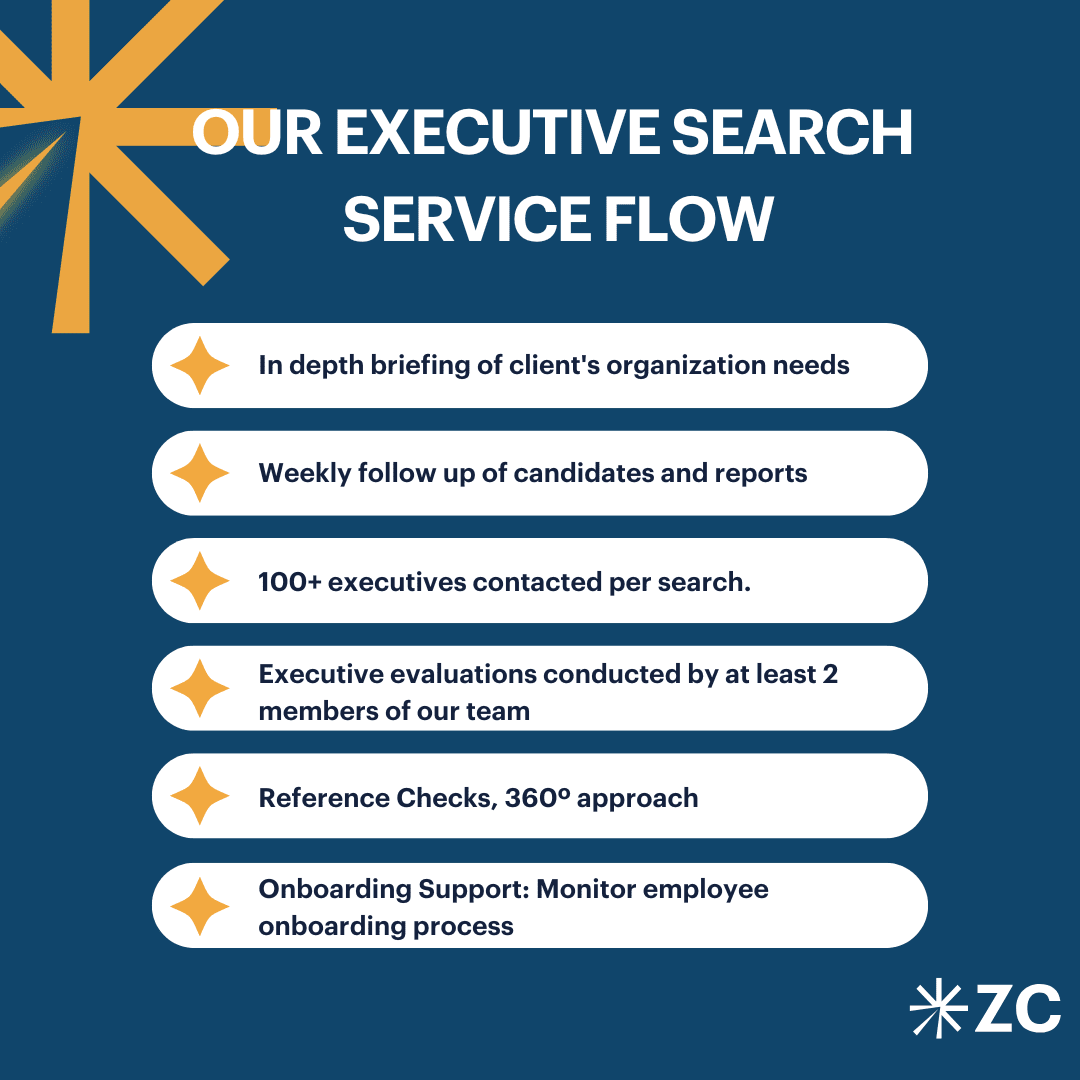
Zavala Civitas’ Executive Search methodology combines market mapping, direct candidate identification, structured assessment and reference validation.
Our Financial Services Executive Search practice supports senior appointments across banking, insurance, investment management and other financial organisations.
For additional local-market context, see our Executive Search services in China.
Frequently Asked Questions: Financial Services Executive Search in China
Financial-sector experience matters. Proven ownership of financial transformation matters more.
Zavala Civitas supports Financial Services organisations in identifying executives capable of combining financial performance, regulation, digital transformation and cross-border leadership in China.
Executive Search → Financial Services → Contact Us →