
Last updated: August 20, 2026
Canada’s automotive industry is navigating one of its most significant periods of transformation in decades.
Electrification and connected vehicles remain strategically important, but they now sit alongside changing trade relationships, tariffs, pressure to maintain domestic production and the need to diversify an industry that remains deeply integrated with the United States.
The Government of Canada reports that the automotive sector supports more than 500,000 workers and contributes more than $16 billion annually to Canadian GDP.
For Executive Search, the leadership challenge is therefore broader than finding executives familiar with electric vehicles. Companies increasingly need leaders who can connect manufacturing, technology, international trade, supply chains and organisational transformation.
Executive Search in Canada’s Automotive Industry: Scale Under Trade Pressure
Canada produced more than 1.2 million passenger vehicles in 2025.
However, the industrial model is exceptionally dependent on cross-border trade. More than 90% of Canadian-made vehicles and 60% of Canadian-made automotive parts are exported to the United States.
That concentration became more strategically important after the United States introduced automotive tariffs in April 2025.
Canadian-made vehicles have since faced a 25% U.S. tariff on their non-U.S. content, while U.S. content within CUSMA-compliant vehicles is exempt.
Key Figures at a Glance
| Canadian Automotive Indicator | Latest Data | Source | Executive Search Implication |
|---|---|---|---|
| Passenger vehicle production | More than 1.2m in 2025 | Government of Canada | Canada retains significant industrial scale, requiring experienced manufacturing, engineering and supply-chain leadership. |
| Canadian-made vehicles exported to the U.S. | More than 90% | Government of Canada | Executives need to understand cross-border economics, trade exposure and international manufacturing networks. |
| Zero-emission vehicle sales | 169,972 in 2025, -35.7% | Statistics Canada | Electrification remains strategic, but executives need to navigate uneven consumer adoption and changing policy incentives. |
| New federal automotive strategy | More than $6.9bn announced | Government of Canada | Investment, productivity, skills and EV infrastructure are becoming interconnected leadership priorities. |
U.S. Tariffs Have Changed the Canadian Automotive Leadership Mandate
Canada’s automotive ecosystem has historically benefited from highly integrated North American production.
Vehicles and components can cross the Canada-U.S. border several times during manufacturing, making trade policy an operational issue rather than simply a government-relations concern.
Since April 2025, Canadian automotive exports have operated within a more complex tariff environment.
The Canadian government states that the United States applies a 25% tariff to the non-U.S. content of Canadian vehicles.
Canada has also maintained automotive counter-tariffs and a remission framework designed to incentivise domestic production and investment.
For automotive executives, these conditions affect sourcing, production allocation, pricing, investment, inventory and negotiations with global headquarters.
A General Manager or Operations leader in Canada may therefore require substantially stronger trade and international stakeholder capabilities than the same title required before the tariff environment changed.
Canada’s EV Market Changed Direction in 2025
The original version of this article described rapidly accelerating electric-vehicle demand and cited the previous federal requirement for zero-emission vehicles.
That context has changed.
Statistics Canada reported that 169,972 zero-emission vehicles were sold in 2025, 35.7% fewer than in 2024.
ZEVs represented approximately 8.7% of new motor vehicles sold, compared with 13.8% in 2024.
Statistics Canada links part of the decline to changes in federal and provincial purchase incentives.
The market therefore illustrates why automotive executives need to distinguish the long-term technology transition from short-term assumptions about adoption speed.
Canada’s EV Regulation Is Moving Away from the Previous 2026 Mandate
The previous federal Electric Vehicle Availability Standard originally established a zero-emission vehicle requirement beginning with the 2026 model year.
That original target should no longer be used as the current policy benchmark.
The federal government waived the regulatory requirement for the 2026 model year and, in its new automotive strategy announced in February 2026, announced that it will repeal the Electric Vehicle Availability Standard.
The government instead plans stronger greenhouse-gas standards for model years 2027 to 2032, with a policy trajectory towards 75% EV sales by 2035 and 90% by 2040.
For leadership teams, changing regulation creates an additional strategic challenge: companies need to invest for the long-term electrification trend without assuming that technology adoption or regulatory requirements will evolve in a straight line.
Canada Is Still Investing in the Next Generation of Automotive Manufacturing
Policy flexibility does not mean Canada is abandoning electrification or next-generation vehicle manufacturing.
The federal government’s 2026 Automotive Strategy includes more than $6.9 billion in announced measures covering investment, electric-vehicle affordability, charging infrastructure, worker retention and skills development.
The strategy also explicitly identifies electrified and connected vehicles, artificial intelligence, autonomous technologies and battery supply chains as areas relevant to Canada’s future automotive competitiveness.
For employers, this means the leadership market increasingly overlaps with adjacent areas such as batteries, advanced manufacturing, software, AI, energy infrastructure and industrial automation.
Connected Vehicles Are Expanding Traditional Automotive Leadership Profiles
Automotive transformation is not limited to replacing internal-combustion engines with batteries.
Vehicles increasingly combine mechanical engineering with electronics, software, data, sensors and increasingly sophisticated driver-assistance capabilities.
Canada’s automotive strategy specifically identifies the country’s artificial-intelligence and technology capabilities as potential advantages in developing next-generation vehicles.
This can expand Executive Search beyond traditional automotive competitors when the mandate requires specialised software, data or advanced-technology leadership.
Supply Chain Leadership in Canada Is Now About Trade as Well as Resilience
Earlier automotive supply-chain discussions focused heavily on semiconductor shortages and pandemic disruption.
Those risks have not disappeared, but Canada’s current environment adds another layer: trade exposure.
Because 60% of Canadian-made automotive parts are exported to the United States, changes in tariffs and North American production economics can influence supplier strategy rapidly.
Supply Chain and Operations executives may therefore need experience evaluating localisation, alternative sourcing, customer concentration, inventory exposure and the economics of shifting production.
What Executive Search Should Assess in Canadian Automotive Leaders
Industrial Transformation
Candidates should demonstrate whether they have personally launched capacity, reconfigured production, improved plant productivity or changed manufacturing processes rather than simply having operated inside a major automotive group.
Trade and North American Market Judgement
Canada’s integration with the United States means executives may need to understand tariffs, CUSMA, cross-border production economics and how changes in trade policy affect investment and sourcing decisions.
Electrification and Battery Experience
The relevant question is not simply whether the candidate has worked with EVs. Executive Search should identify whether they personally changed the product, plant, supplier network or investment strategy as electrification developed.
Supply Chain Resilience
Executives should demonstrate how they have balanced cost, localisation, inventory and resilience when suppliers or trade conditions changed.
Technology and Connected-Vehicle Judgement
Senior leaders increasingly need enough understanding of software, AI, electronics and connected technologies to make strategic decisions even when they are not engineering specialists themselves.
Global Headquarters Influence
Many Canadian automotive operations form part of multinational production networks. Local executives may therefore need to compete internally for capital, future models and manufacturing mandates while explaining changing Canadian economics to global headquarters.
Automotive Executive Search in Canada May Need Adjacent Industries
Automotive experience remains essential for some roles, particularly where manufacturing systems, vehicle engineering or automotive quality standards are central to the mandate.
Other searches can benefit from broader market mapping.
Executives from batteries, energy, artificial intelligence, industrial automation, electronics, semiconductors or advanced manufacturing may bring capabilities increasingly relevant to next-generation vehicle organisations.
The search should therefore determine which automotive experience is genuinely indispensable and which transformation capabilities can transfer from another sector.
Executive Development Can Complement External Automotive Search
Not every new capability needs to be acquired externally.
An internal automotive executive may already understand the Canadian plant, supplier network and organisation exceptionally well while lacking experience in one emerging area such as electrification, international trade or connected technologies.
External market mapping can help determine whether the internal candidate compares favourably with leadership available elsewhere.
Where the potential exists but specific leadership gaps remain, Executive Assessment and Leadership Development can support a more informed succession decision.
How Zavala Civitas Approaches Automotive Executive Search in Canada
Zavala Civitas begins by defining the industrial, technological and commercial transformation the incoming executive is expected to deliver.
For a Canadian automotive mandate, this may require understanding:
- whether the organisation is an OEM, supplier or adjacent technology business;
- how U.S. trade exposure affects the leadership mandate;
- whether the company needs electrification, localisation or manufacturing transformation;
- which technology capabilities are genuinely required;
- how the executive will manage suppliers and North American production networks;
- which global headquarters stakeholders the candidate must influence;
- and what each candidate personally owned in previous transformations.
The candidate universe can then be mapped across Canadian and international automotive companies together with relevant adjacent sectors.
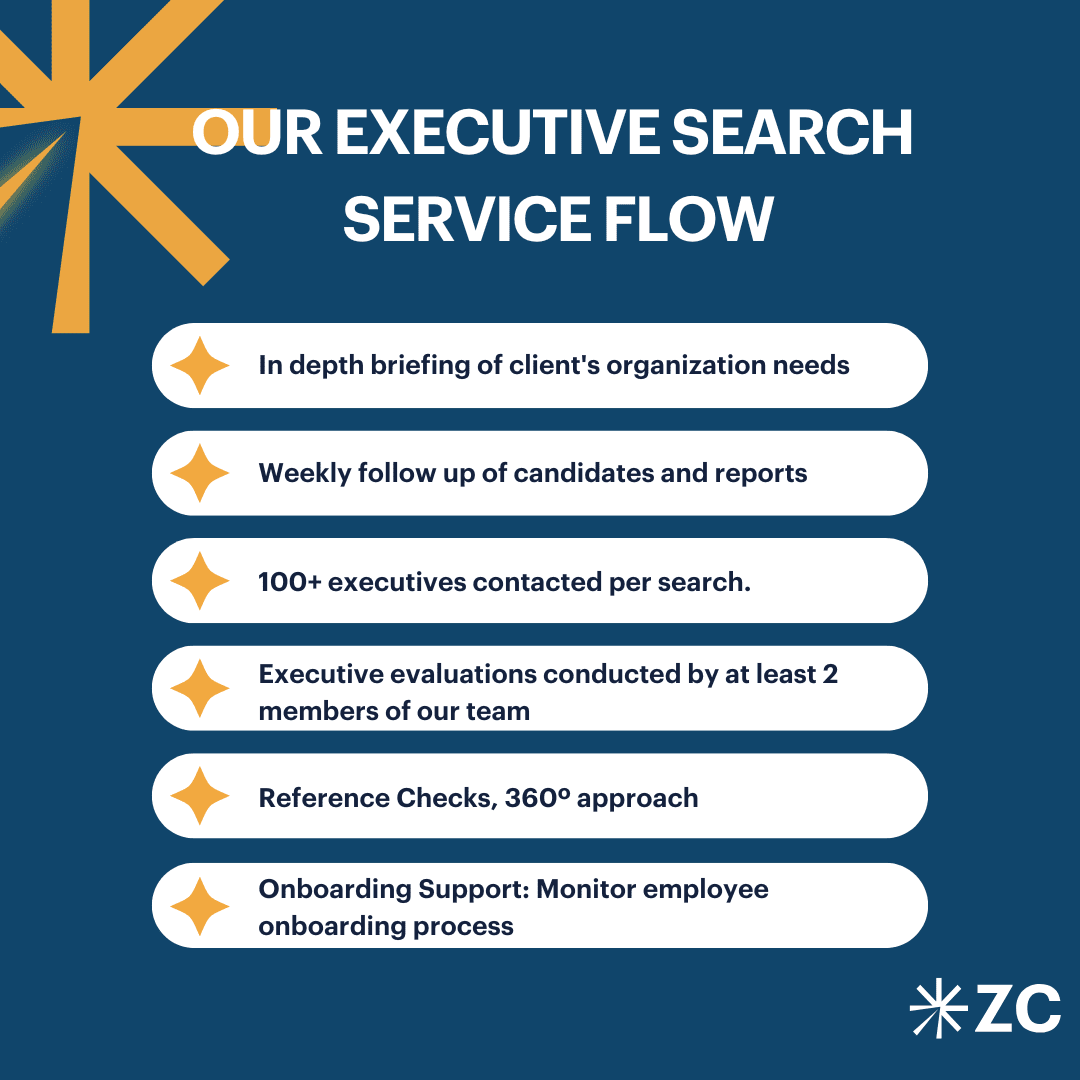
Zavala Civitas’ Executive Search methodology combines market mapping, direct candidate identification, structured assessment and reference validation.
Our Industrial Executive Search practice supports senior leadership mandates across automotive, manufacturing and related industrial businesses.
Frequently Asked Questions: Automotive Executive Search in Canada
Canada’s automotive transition is now about technology, trade and industrial competitiveness at the same time.
Zavala Civitas supports automotive and industrial organisations in identifying executives capable of leading manufacturing, electrification and cross-border transformation in Canada.
Executive Search → Industrial Sector → Contact Us →