Last updated: August 20, 2026
The U.S. automotive industry has moved beyond the supply shortages and exceptional market conditions that defined the first years of the decade, but it has not returned to a simple pre-pandemic operating model.
Vehicle demand remains substantial, while manufacturers and suppliers simultaneously face changing powertrain preferences, new trade barriers, technology investment, automated-driving development and pressure to strengthen domestic production.
New U.S. light-vehicle sales reached 16.2 million units in 2025, an increase of 2.4% from 2024.
For Executive Search, however, market size is only part of the leadership challenge. The candidate brief increasingly depends on which part of the automotive transformation the organisation must lead next.
Executive Search in the U.S. Automotive Industry: A Large Market with a Changing Operating Model
The U.S. vehicle market entered 2026 with demand at comparatively healthy levels.
The 16.2 million light vehicles sold in 2025 represented the strongest annual sales volume since 2019.
Yet the composition of demand changed materially during the year as tariffs influenced purchase timing and the expiration of federal electric-vehicle tax credits altered the economics of battery-electric vehicles.
The result is an automotive market where executives need to distinguish structural transformation from temporary demand effects.
Key Figures at a Glance
| U.S. Automotive Indicator | Latest Data | Source | Executive Search Implication |
|---|---|---|---|
| New light-vehicle sales | 16.2m in 2025, +2.4% | NADA | Demand remains substantial, but leaders need to distinguish volume growth from underlying changes in product mix and profitability. |
| Electrified light-duty vehicle sales | 24% in Q2 2026 | U.S. EIA | Electrification continues, but the technology mix is becoming more important than a simple EV versus combustion distinction. |
| Battery-electric vehicle share | 6% in Q2 2026 | U.S. EIA | BEV leadership remains relevant, but companies should not assume that one powertrain will define every product strategy. |
| Motor vehicles and parts employment | Approx. 964,500 jobs in July 2026 | U.S. Bureau of Labor Statistics | Automotive transformation affects a substantial industrial workforce, making capability redesign and organisational leadership strategic issues. |
U.S. Automotive Electrification Is Becoming Less Linear
The original version of this article assumed a relatively straightforward progression towards higher battery-electric vehicle penetration.
The current market is more complex.
The U.S. Energy Information Administration reported that approximately 22% of light-duty vehicles sold in 2025 were hybrid, battery-electric or plug-in hybrid vehicles.
Within that total, hybrid vehicles continued gaining market share while annual battery-electric sales and market share declined for the first time.
By the second quarter of 2026, conventional hybrids represented a record 16% of new light-duty sales, while battery-electric vehicles represented 6%.
For Product, Commercial, Engineering and General Management roles, the question is therefore no longer simply how quickly to transition towards electric vehicles.
Executives need to decide which mix of battery-electric, hybrid and conventional technologies makes strategic and commercial sense for the organisation’s customer base, manufacturing footprint and investment cycle.
The Expiration of U.S. EV Tax Credits Changed the Commercial Environment
Federal incentives also changed materially during 2025.
The Internal Revenue Service confirms that the New Clean Vehicle Credit, Previously Owned Clean Vehicle Credit and Qualified Commercial Clean Vehicle Credit are not available for vehicles acquired after September 30, 2025.
The market reaction was visible almost immediately.
Battery-electric vehicles reached a record 12% share of light-duty sales in September 2025 immediately before the credits expired, before falling below 6% in each of the remaining months of the year.
This creates a more demanding commercial leadership environment.
Executives need to distinguish underlying customer demand from demand generated by incentives, and to adjust pricing, production and product planning when policy changes alter the economics of a vehicle category.
Automotive Tariffs Have Made Localisation a Senior Leadership Decision
Trade policy is now another major element of the U.S. automotive leadership mandate.
In March 2025, the United States introduced a 25% Section 232 tariff on covered imported automobiles and specified automotive parts, subject to particular exemptions, origin rules and subsequent adjustments.
For qualifying USMCA vehicles, the tariff framework allows the duty to be applied specifically to the non-U.S. content when approved under the relevant procedure.
The administration also created tariff-offset mechanisms for manufacturers assembling vehicles in the United States.
For CEOs, COOs, Supply Chain leaders and Finance executives, tariff exposure is therefore connected directly to sourcing, localisation, manufacturing footprint and capital allocation.
Executive Search should determine whether candidates have actually reconfigured supply chains or production economics in response to trade changes, rather than simply having worked in an international automotive business.
U.S. Automotive Supply Chain Leadership Is Moving Beyond Shortage Management
Earlier in the decade, automotive supply-chain leadership was heavily associated with semiconductors, logistics disruption and shortages.
Those risks remain relevant, but the mandate has broadened.
Supply Chain executives increasingly need to understand where components should be sourced, which production should be localised, how tariff exposure changes supplier economics and which suppliers remain strategically relevant as vehicle architectures evolve.
Powertrain diversification creates another layer of complexity because battery-electric, hybrid and internal-combustion platforms can require different supplier networks, capital commitments and component strategies.
The strongest candidate may therefore be someone who has redesigned the supply chain rather than simply managed a large one.
Automated Driving and Software Are Expanding Automotive Executive Profiles
Vehicle technology is also moving beyond the powertrain.
Software, connectivity, advanced driver-assistance systems and automated-driving technologies increasingly affect product development and competitive positioning.
In 2025, the National Highway Traffic Safety Administration introduced an updated Automated Vehicle Framework and expanded its Automated Vehicle Exemption Program to include domestically produced vehicles.
NHTSA subsequently launched rulemaking initiatives intended to modernise Federal Motor Vehicle Safety Standards for vehicles equipped with automated-driving systems.
The agency also makes an important distinction between commercially available driver-assistance technologies and higher levels of automated driving: fully automated vehicles are not currently available for consumer purchase.
For Executive Search, this creates demand for leaders capable of integrating software, engineering, regulation, cybersecurity, product and safety decisions rather than treating automated driving as an isolated R&D programme.
The Automotive Workforce Is Also Being Redesigned
Automotive transformation has organisational consequences as well as technological ones.
The U.S. Bureau of Labor Statistics reported approximately 964,500 jobs in motor vehicle and parts manufacturing in July 2026.
Within this workforce, the capabilities required by traditional powertrain engineering, battery manufacturing, electrical systems, software and automated-driving technologies are not interchangeable.
Senior leaders may therefore need to recruit scarce capabilities while simultaneously redesigning existing organisations, reskilling employees and deciding which technical competencies should remain internal.
This makes workforce architecture a strategic issue for CEOs, COOs, CTOs and HR executives rather than an HR-only responsibility.
What Executive Search Should Assess in U.S. Automotive Leaders
Powertrain Portfolio Judgement
Executives should demonstrate how they have made decisions across battery-electric, hybrid and conventional technologies rather than being assessed simply on whether they have EV experience.
Industrial Transformation
Candidates should show what they personally changed in plants, manufacturing systems, product launches, productivity or industrial footprint.
Trade and Localisation Strategy
Tariffs and origin rules make it increasingly important for senior leaders to understand the economics of domestic production, imported components and North American supply chains.
Software and Automated-Driving Leadership
Executives increasingly need enough knowledge of software, data, cybersecurity and driver-assistance technology to align specialised technical teams with commercial and regulatory objectives.
Supply Chain Resilience and Redesign
The stronger evidence is not simply experience managing suppliers but evidence of having changed supplier architecture when technology, cost or trade conditions required it.
Commercial Adaptability
The changing relationship between incentives, vehicle prices and powertrain demand makes it increasingly important for leaders to separate temporary market signals from durable customer behaviour.
OEMs, Suppliers and Mobility Businesses Require Different Leadership Profiles
The U.S. automotive ecosystem should not be treated as a single executive talent market.
An OEM deciding how to allocate capital across vehicle platforms requires a different leadership profile from a component manufacturer exposed to declining legacy products.
A battery producer, charging company or autonomous-driving technology business may require different operating experience again.
Executive Search should therefore begin by defining the economics of the organisation and the transformation required before deciding which employers should constitute the candidate universe.
Automotive Executive Search Should Consider Adjacent Technology and Industrial Talent
Some senior automotive roles require deep sector-specific experience, particularly where vehicle engineering, manufacturing quality or automotive regulation are central to the mandate.
Other searches can benefit from a wider talent map.
Executives from semiconductors, batteries, industrial software, artificial intelligence, electronics, energy infrastructure or advanced manufacturing may possess capabilities directly relevant to the transformation underway.
The search should determine which automotive experience is indispensable and which capabilities can transfer from adjacent sectors.
Internal Automotive Successors Should Be Benchmarked Against the External Market
Not every new automotive capability needs to be recruited externally.
An internal executive may already possess customer relationships, manufacturing knowledge and organisational credibility while needing development in one emerging area such as software, electrification or international supply-chain strategy.
External market mapping can establish whether that internal leader compares favourably with executives available elsewhere.
Where leadership potential exists but specific capability gaps remain, Executive Assessment and Leadership Development can support the succession decision.
How Zavala Civitas Approaches Automotive Executive Search in the United States
Zavala Civitas begins by defining the industrial, technological and commercial transformation the incoming executive is expected to deliver.
For a U.S. automotive mandate, the organisation may need to clarify:
- whether the organisation is an OEM, supplier, mobility company or adjacent technology business;
- which powertrain technologies are strategically important to the next product cycle;
- how tariffs and localisation affect manufacturing and sourcing economics;
- whether the mandate involves software, connected vehicles or automated-driving technology;
- which supply-chain capabilities need to be redesigned;
- whether relevant talent should be mapped outside direct automotive competitors;
- and what each candidate personally owned in previous transformations.
The candidate market can then be mapped across U.S. automotive manufacturers, suppliers and relevant adjacent industrial and technology organisations.
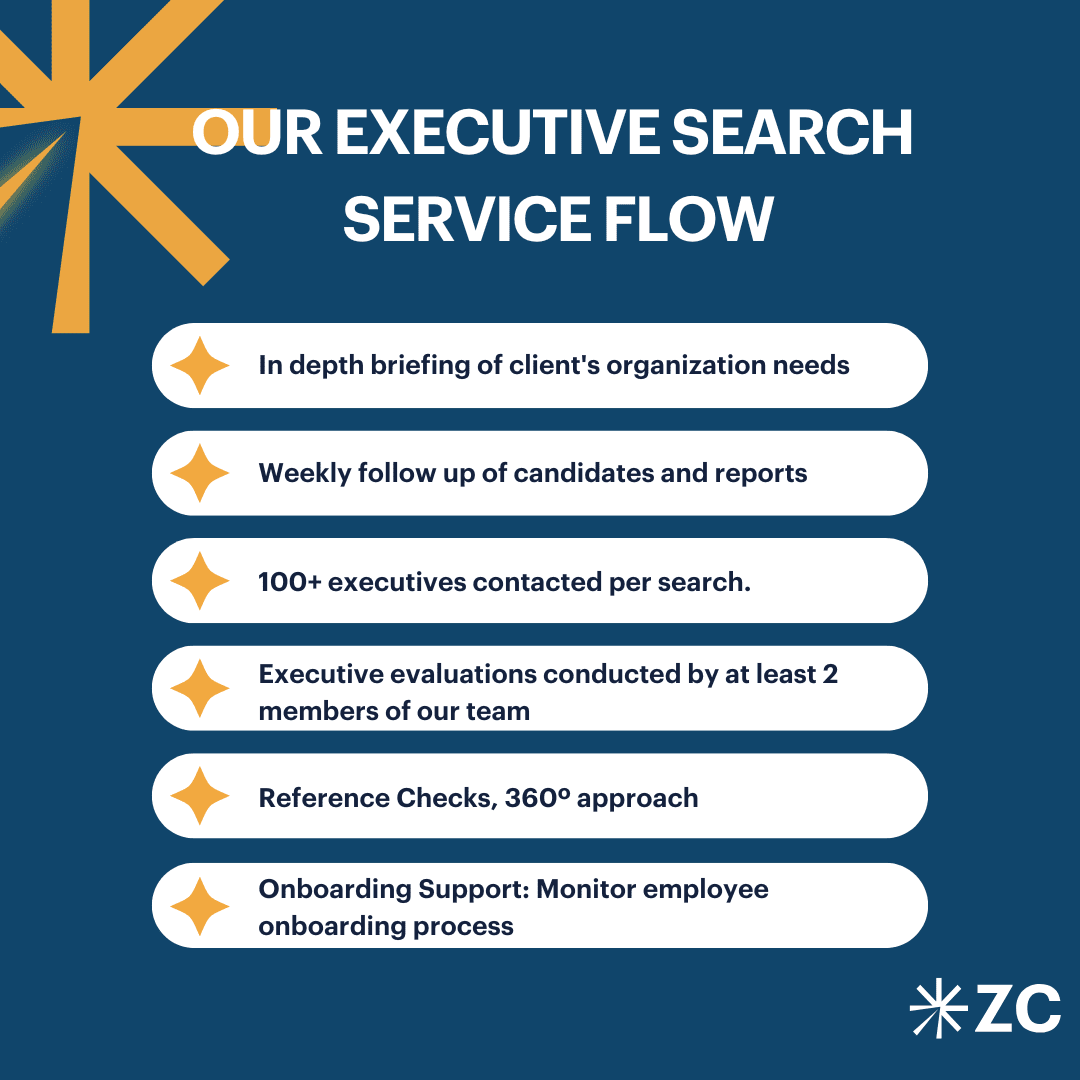
Zavala Civitas’ Executive Search methodology combines market mapping, direct candidate identification, structured assessment and reference validation.
Our Industrial Executive Search practice supports senior appointments across automotive, manufacturing, mobility and related industrial businesses.
Frequently Asked Questions: Automotive Executive Search in the United States
The U.S. automotive transformation is no longer one technology transition. It is several happening at the same time.
Zavala Civitas supports automotive and industrial organisations in identifying executives capable of leading technology, manufacturing, localisation and supply-chain transformation in the United States.
Executive Search → Industrial Sector → Contact Us →