
Last updated: August 20, 2026
Executive Assessment provides organisations with a structured way to evaluate whether a leader’s capabilities, behaviour, motivation and leadership style are aligned with a specific role.
This is increasingly relevant for companies operating in China. The country’s business environment combines rapid technology adoption, international expansion, organisational transformation and a growing need to prepare future leadership pipelines.
In this context, previous performance alone does not always predict future effectiveness. A successful functional executive may not automatically be ready for general management. A strong China Country Manager may need different capabilities when moving into an Asia-Pacific role. An executive who performed well under a stable business model may need a different leadership approach when AI, restructuring or internationalisation changes the organisation around them.
A structured Executive Assessment can help make those transitions more evidence-based.
Why Executive Assessment Matters for Companies in China
The leadership environment surrounding Chinese companies is changing quickly.
PwC’s 2026 China CEO Survey found that 52% of surveyed Chinese enterprises reported that AI applications had contributed to revenue growth, compared with 29% globally.
The same research found that innovation has become a central strategic priority for Chinese CEOs, while organisations are also strengthening resilience and adapting their operating models.
For executive assessment, the implication is important. Companies need to understand whether their leaders can operate effectively in the environment the business is moving towards, rather than assess them only against the environment in which they built their career.
Key Figures at a Glance
| Leadership Context | Latest Data | Source | Assessment Implication |
|---|---|---|---|
| Chinese enterprises reporting revenue growth from AI | 52% vs 29% globally | PwC China, 2026 | Assessment increasingly needs to test whether executives can translate technology into commercial and organisational outcomes. |
| Chinese Mainland enterprises with strong supply-side resilience | 44% vs 28% globally | PwC China, 2026 | Adaptability and decision-making under disruption can be more useful assessment criteria than experience in a stable operating environment. |
| Chinese Mainland CEO time focused on medium and long-term horizons | 49% medium-term; 28% long-term | PwC Global CEO Survey, 2026 | Senior assessment should examine strategic judgement and future orientation alongside operational delivery. |
| Population aged 60 and over in China | 323.38 million, 23.0% | National Bureau of Statistics, 2025 | Population ageing does not directly measure executive retirement, but it reinforces the strategic importance of succession readiness and internal leadership pipelines. |
Executive Assessment Helps Separate Past Performance from Future Potential
One of the most difficult leadership decisions is determining whether a successful executive is ready for a materially different role.
Performance in a current position provides useful evidence, but every promotion changes the context in which that executive is expected to succeed.
For example, a Finance Director may move from functional expertise into a CFO role requiring board influence and strategic capital allocation. A commercial leader may become a Country Manager responsible for operations, people and regulation. A Chinese executive promoted into a regional role may need to influence teams across markets without relying on direct authority.
Executive Assessment helps identify whether the leader’s existing strengths are transferable and which development gaps may become more significant as the mandate expands.
Executive Assessment and Succession Planning in China
Succession planning is another important application.
China’s population aged 60 and over reached 323.38 million people at the end of 2025, equivalent to 23.0% of the population.
This demographic figure should not be interpreted as a measure of executive retirement or as evidence that every company faces an immediate leadership gap. However, it forms part of a broader environment in which organisations benefit from understanding whether they have credible internal successors before a transition becomes urgent.
Assessment can help answer questions such as:
- Which internal executives are genuinely ready for a larger mandate?
- Which candidates have strong potential but require targeted development first?
- Where does the organisation have no credible internal successor?
- Which leadership capabilities are concentrated in only one or two individuals?
- Should the company develop internally or begin an external Executive Search?
What Should Executive Assessment Evaluate?
A meaningful assessment should be anchored to the role rather than produce a generic judgement about whether someone is a “good leader”.
Strategic Judgement
Can the executive distinguish urgent operational issues from decisions that affect the organisation’s longer-term position? This becomes particularly relevant when leaders are expected to allocate capital, enter new markets or manage transformation.
Adaptability and Learning Agility
Experience is valuable, but executives also need to adjust when the operating model changes. This is increasingly important where AI, digitalisation or changing market conditions make previous assumptions less useful.
Leadership Style and Organisational Fit
Assessment should consider how the executive influences others, delegates, manages disagreement and operates within the decision-making environment of the organisation.
Cross-Cultural Leadership
For multinational companies operating in China, senior executives may need to reconcile local commercial realities with international governance, headquarters expectations and regional stakeholders.
Motivation and Role Alignment
Capability alone is not enough. An executive can be technically ready for a role but poorly aligned with its actual level of ambiguity, stakeholder exposure, geographic scope or transformation demands.
How Zavala Civitas Conducts Executive Assessment
At Zavala Civitas, assessment begins with an alignment discussion to define the role, objectives and expectations before evaluating the executive.
The process then combines psychometric and behavioural evidence rather than relying on one test or one interview.
According to our published Executive Assessment methodology, the process can include:
- an alignment meeting to define the objectives and role requirements;
- psychometric assessment using PAPI by Cubiks Talogy;
- a structured competency-based interview;
- optional multi-source 360º reference checks;
- an optional 100-day plan and business case discussion;
- and comprehensive reporting combining assessment evidence with expert interpretation.
The purpose is not to replace judgement with a score. It is to improve the quality of that judgement by combining different forms of evidence and interpreting them against the specific leadership mandate.
When Should a Company in China Use Executive Assessment?
Executive Assessment can support several different leadership decisions.
- Internal promotion: determining whether an executive is ready for a broader role.
- Succession planning: comparing potential successors against the future requirements of the position.
- External hiring: adding structured evidence at the final stage of an Executive Search.
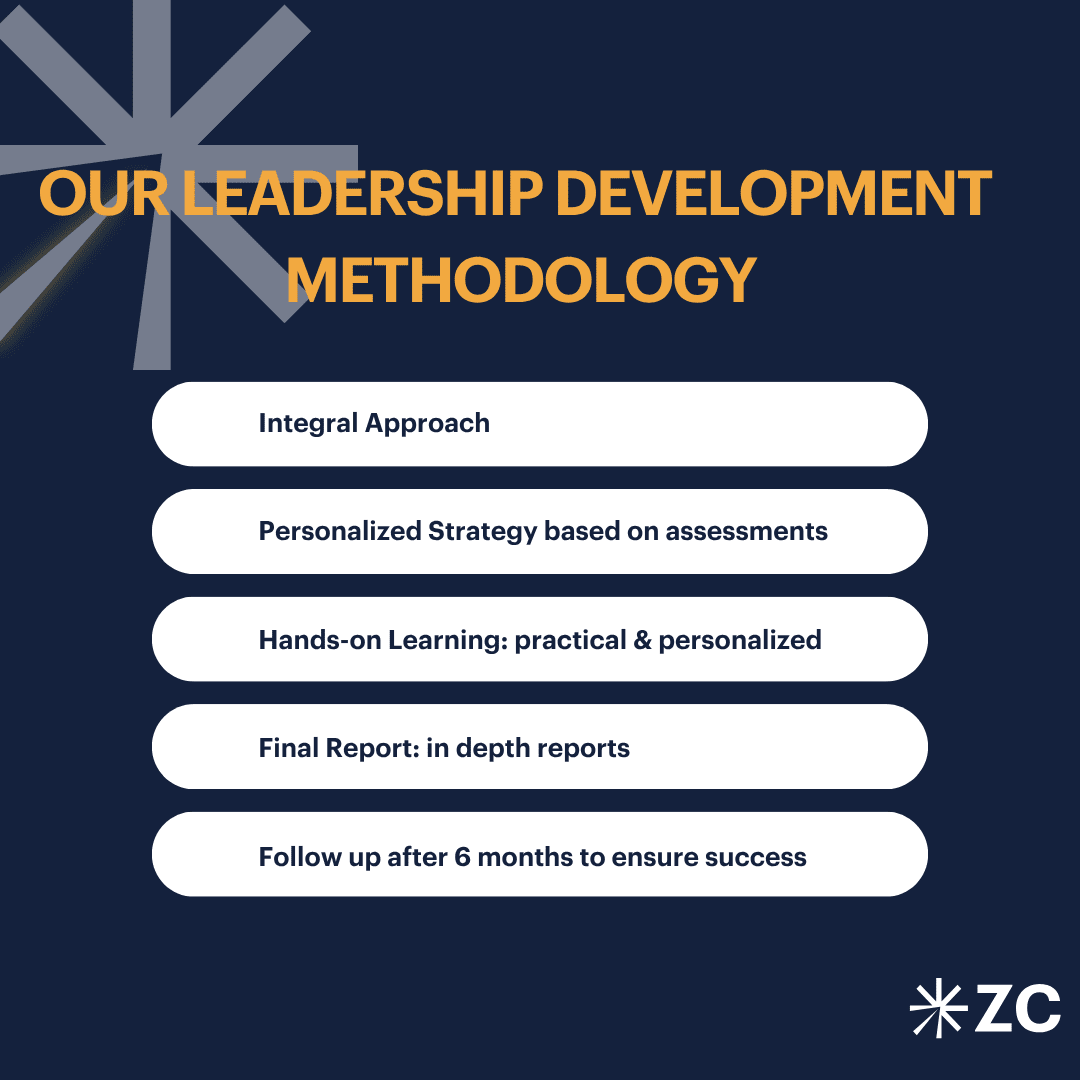
- Leadership development: identifying strengths and gaps before designing a personalised development programme.
- Team assessment: understanding where capabilities are strong or underrepresented across an executive team.
- Transformation: determining whether the current leadership team is equipped to operate differently as strategy changes.
Our analysis of Executive Assessment in China explores this role-specific approach in greater detail.
Executive Assessment Should Lead to a Decision, Not Just a Report
Assessment creates the greatest value when the organisation knows what decision it needs to make.
The outcome may be that an executive is ready for promotion. It may be that the person has potential but requires targeted development first. It may reveal that two internal candidates bring complementary strengths, or that the company needs to look externally because a critical capability is missing.
This is why Executive Assessment, Leadership Development and Executive Search should be viewed as complementary leadership tools rather than isolated services.
Frequently Asked Questions: Executive Assessment in China
The question is not only whether an executive has succeeded before, but whether they are equipped for what comes next.
Zavala Civitas helps organisations assess leadership potential, succession readiness and role alignment through structured Executive Assessment.
Executive Assessment → Leadership in China → Contact Us →