
Last updated: August 20, 2026
Leadership development is becoming a more strategic issue for companies operating in China. The challenge is not simply to create stronger managers, but to prepare leaders for an environment shaped by artificial intelligence, changing skills requirements, international competition and organisational transformation.
This is particularly important when companies already have strong internal executives but recognise that the next stage of the business will require capabilities those leaders have not yet needed to demonstrate.
In these situations, replacing the executive is not always the best answer. A structured Leadership Development programme can help identify the gap between current leadership capability and the future demands of the organisation, then build a development plan around that specific gap.
Why Leadership Development Matters for Companies in China
China’s broader labour and skills strategy illustrates how important continuous capability development has become. Under the country’s human resources and social security plan for 2026-2030, authorities aim to provide more than 50 million subsidised vocational training opportunities.
The same plan targets the issuance of 14 million professional qualification certificates during the 15th Five-Year Plan period.
These figures refer to China’s wider workforce rather than executives specifically, but they illustrate the scale of the national emphasis on skills renewal and employability.
At senior level, the same underlying challenge applies differently. Executives need to continue developing as technology, strategy and organisational expectations change around them.
Key Figures at a Glance
| Leadership & Skills Indicator | Latest Data | Source | Leadership Implication |
|---|---|---|---|
| Subsidised vocational training opportunities targeted for 2026-2030 | 50 million+ | China Human Resources & Social Security Plan | Continuous skills development is becoming a structural workforce priority rather than a one-off training activity. |
| Professional qualification certificates targeted for 2026-2030 | 14 million | China Human Resources & Social Security Plan | Organisations need clearer mechanisms for identifying, developing and validating capability as jobs evolve. |
| CEOs highly exposed to a lack of key skills | 22% | PwC, 2026 | Skills availability has become a direct business performance issue for senior leadership. |
| CEOs who believe their leadership teams can anticipate disruption | 27% | PwC, 2026 | Leadership development increasingly needs to build anticipatory judgement, adaptability and strategic readiness, not only management technique. |
Leadership Development in China Should Be Built Around the Business Context
Generic leadership programmes can be useful for broad learning, but senior executives usually require something more specific.
A Country Manager preparing to take responsibility for Asia-Pacific may need stronger cross-cultural leadership and regional stakeholder management. A Sales Director with strong individual results may need to improve team performance. A technically strong executive preparing for a general management position may need greater commercial judgement or board exposure.
The development need therefore depends on the gap between the executive’s current profile and the role the organisation expects that person to perform next.
This is why leadership development works particularly well when combined with Executive Assessment. Assessment provides the diagnosis; development provides the intervention.
Four Leadership Capabilities Becoming More Important in China
1. Anticipating Disruption
PwC reports that only 27% of CEOs believe their leadership teams can anticipate disruption.
For executives, this means leadership development increasingly needs to strengthen scenario thinking, strategic judgement and the ability to identify second-order consequences before a disruption becomes operationally urgent.
2. Leading Through AI and Technology Change
Artificial intelligence is changing workflows, roles and decision-making across sectors. Leaders do not all need deep technical expertise, but they need enough understanding to determine where technology creates value, how responsibilities should change and which capabilities need to be developed inside their teams.
PwC notes that skills gaps can directly constrain performance, with 22% of global CEOs reporting high exposure to a lack of key skills.
3. Cross-Cultural and International Leadership
Executives operating in China may need to reconcile local market realities with international headquarters, boards, investors and regional teams.
Leadership development can therefore include communication, stakeholder management and decision-making across different organisational and cultural environments rather than treating international capability as simply language proficiency.
4. Developing Other Leaders
A strong senior executive does not only deliver personal results. As responsibility expands, the leader’s ability to build capability beneath them becomes increasingly important.
This includes delegation, feedback, succession planning, coaching and creating an environment in which other managers can take responsibility rather than escalating every decision upwards.
How a Leadership Development Programme Should Be Structured
Effective leadership development begins with diagnosis rather than training content.
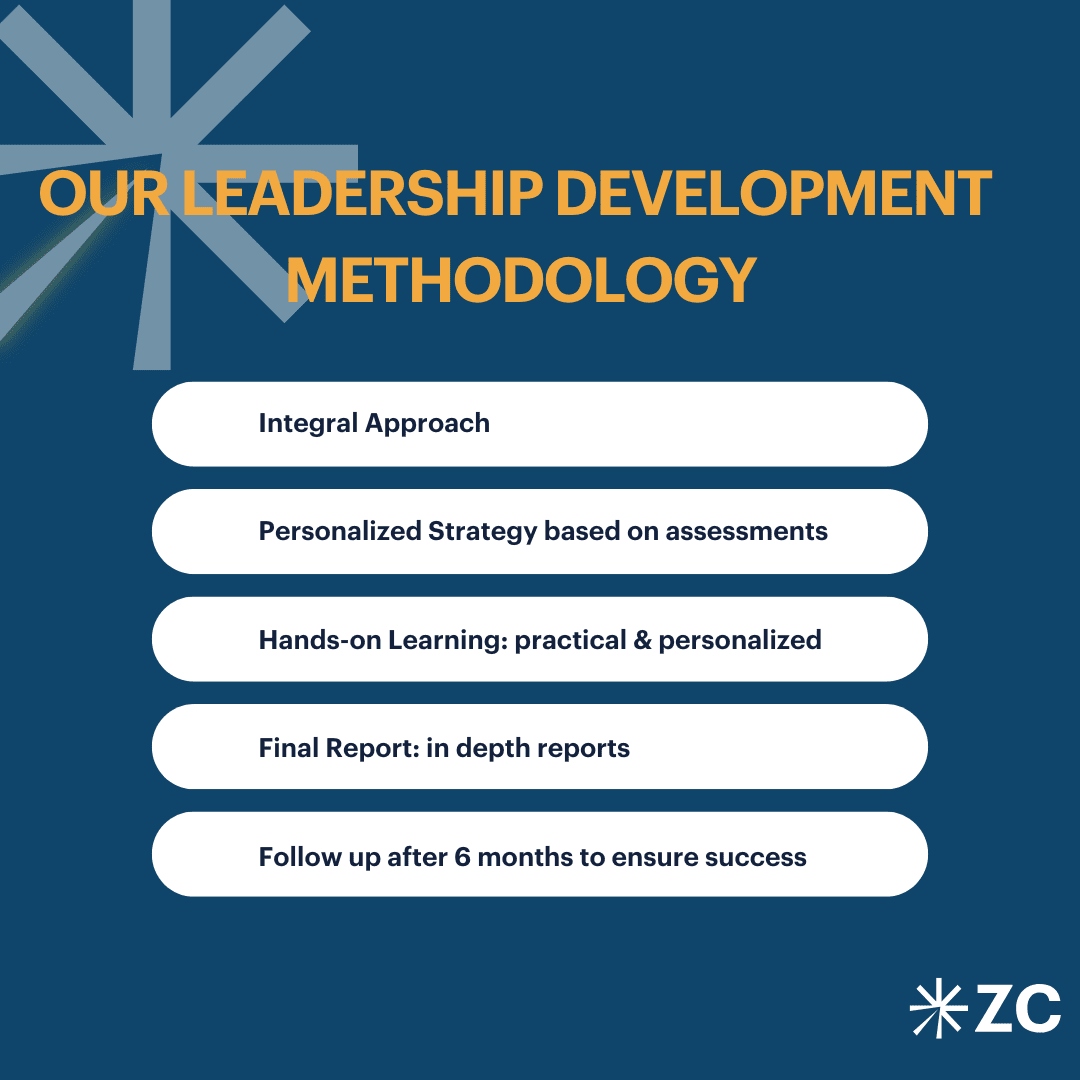
At Zavala Civitas, the process is personalised around the executive and organisational context.
Integral Diagnosis
The organisation first defines the business requirements and the executive’s current development needs. Where appropriate, psychometric and structured assessment tools can provide additional evidence about strengths, leadership style and development gaps.
Personalised Development Strategy
The development plan is designed around the specific capabilities the executive needs to strengthen rather than applying a standard leadership curriculum.
Hands-On Learning
Development should connect learning to the leader’s actual work. Zavala Civitas uses practical business cases, academic material and applied exercises relevant to the executive’s own situation.
Final Evaluation and Continued Engagement
The programme concludes with reporting on progress and development priorities, followed by continued engagement to determine whether the changes are being sustained within the executive’s real working environment.
When Should Companies in China Invest in Leadership Development?
Leadership development is particularly useful when the organisation believes an existing executive has strong potential but the future role requires capabilities that are not yet fully developed.
Typical situations include succession into a larger role, international expansion, organisational transformation, integration following an acquisition, preparation for board responsibility or a strong performer who needs to improve leadership of others.
It can also help organisations determine whether developing an internal executive is a stronger option than launching an external search.
In that sense, Executive Search, assessment and leadership development should not be viewed as completely separate decisions. They are different ways of answering the same organisational question: what leadership capability does the business need, and where is the strongest source of that capability?
Leadership Development Services for Companies in China
For companies operating in China, leadership development can help strengthen executives already familiar with the business, culture and market while preparing them for responsibilities that extend beyond their current role.
At Zavala Civitas, programmes are designed around the needs of the individual executive and the organisation rather than a predefined training catalogue.
Our Executive Assessment and Leadership Development approach can combine objective diagnosis with personalised development, practical business cases and continued client engagement.
Frequently Asked Questions: Leadership Development in China
The strongest leadership development programmes begin with a specific business need, not a generic curriculum.
Zavala Civitas helps organisations assess and develop existing leaders around the capabilities required for their next stage of growth.
Leadership Development → Executive Assessment → Contact Us →